
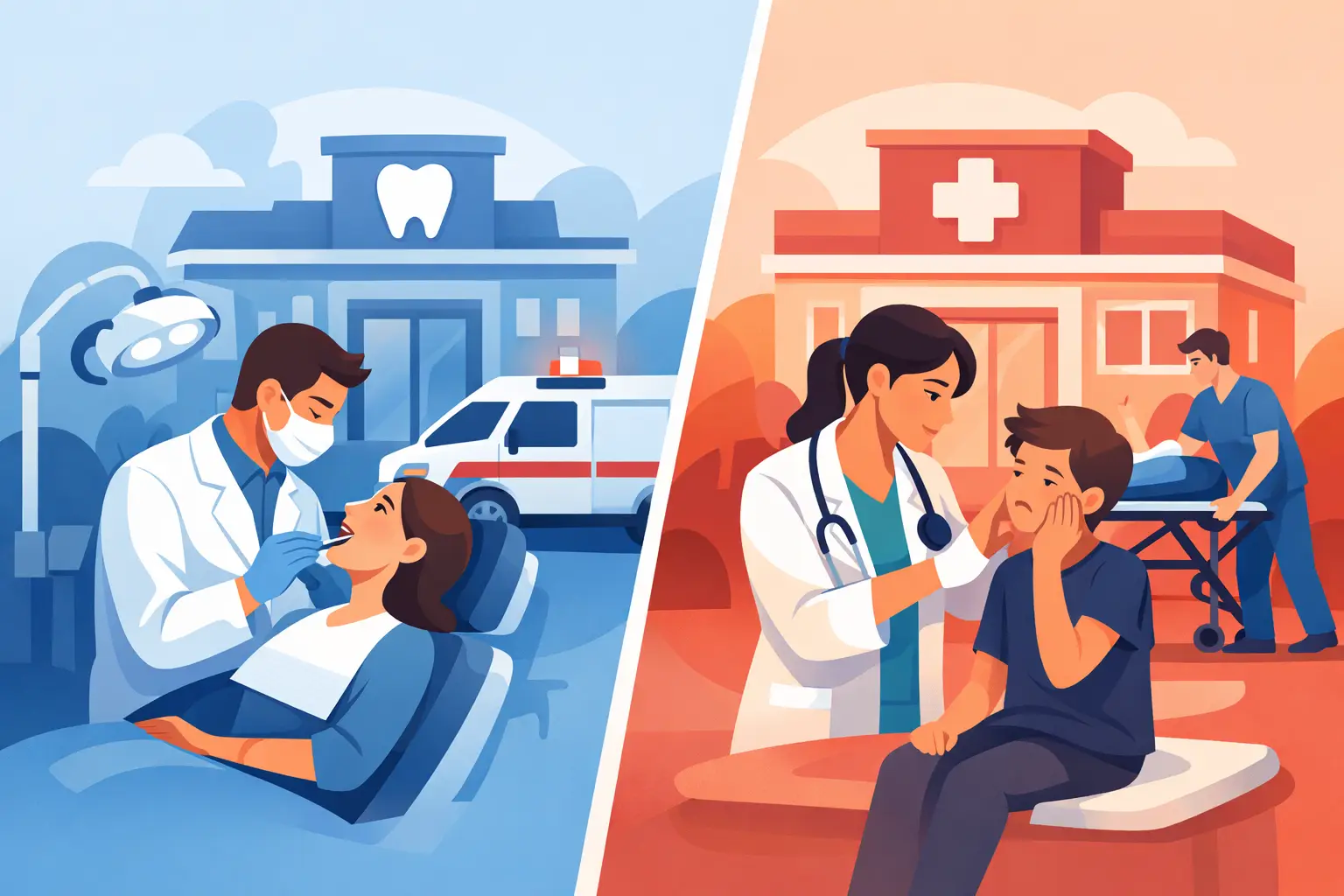
A cracked tooth during dinner, a child with a knocked-out tooth, or facial swelling that seems to worsen by the hour can make it hard to think clearly. When comparing an emergency dentist versus urgent care, the right choice depends on what is happening, how severe the symptoms are, and whether your overall health may be at risk.
For many tooth, gum, and mouth problems, a dentist is the provider best equipped to identify the cause and treat it. Urgent care can still be useful when dental care is unavailable or when you need help managing broader medical symptoms. The key is recognizing when the situation has moved beyond a dental problem and needs emergency medical attention.
Emergency Dentist Versus Urgent Care: The Main Difference
An emergency dentist focuses on problems involving teeth, gums, restorations, bites, and dental infections. They can examine the source of pain, take dental X-rays when needed, stabilize damaged teeth, treat some injuries, and discuss the next step for protecting your oral health. That may include repairing a broken tooth, treating an abscess, replacing a lost filling, or planning prompt follow-up care.
Urgent care centers are designed for non-life-threatening medical concerns. A clinician may assess pain, evaluate visible swelling, prescribe medication when appropriate, or help determine whether you need a hospital evaluation. However, urgent care usually cannot repair a tooth, place a dental restoration, reattach a crown, or provide definitive treatment for the cause of a toothache.
That distinction matters. Pain medication or antibiotics can sometimes offer short-term relief, but they do not remove decay, repair a fracture, or drain and treat every type of dental infection. If the issue is clearly dental and you are medically stable, seeing a dentist is usually the more direct path to care.
When to Call an Emergency Dentist
Call a dentist promptly if you have a severe toothache, a cracked or broken tooth, a tooth that has been knocked loose, a lost filling or crown that is causing pain, or swelling around a tooth or gum. These problems can become more complicated when they are left untreated, especially if pain is increasing or you have trouble eating, sleeping, or concentrating.
A dentist is also the right first call when dental work breaks. A crown that comes off may not seem urgent if there is no pain, but the exposed tooth can be sensitive and more vulnerable to damage. A broken denture, sharp edge of a tooth, or loose temporary restoration may also need timely attention to keep you comfortable and prevent further injury.
For a knocked-out permanent tooth, time is especially important. Handle the tooth by the crown, not the root. If it is dirty, rinse it gently with clean water without scrubbing. If possible, place it back in the socket and have the person bite gently on clean gauze. If that is not possible, keep it moist in milk or saliva and contact a dentist immediately. Do not try to reinsert a baby tooth.
At Parliament Street Dentistry, patients can contact the clinic to discuss a dental concern, request an appointment, and receive clear information about treatment and expected costs. For families, having a familiar dental office to call can make an unexpected problem feel much more manageable.
When Urgent Care May Be the Better Choice
Urgent care can be appropriate when you have dental pain but cannot reach a dentist, particularly if you need an assessment for pain, fever, or swelling outside regular dental availability. It may also be a sensible stop if you are unsure whether symptoms are caused by a dental problem, a sinus issue, an ear issue, or another medical condition.
Still, plan to see a dentist as soon as you can. Urgent care may help you get through the immediate discomfort, but ongoing dental treatment is often needed to prevent the problem from returning.
Urgent care may also be helpful for injuries to the lips, tongue, or inside of the cheek when a wound needs medical assessment. If the injury includes a broken, loose, or missing tooth, contact a dentist as well. You may need both types of care depending on the injury.
Go to the Emergency Room for Serious Warning Signs
Some symptoms should not wait for a dental appointment or urgent care visit. Call 911 or go to the emergency room if you have trouble breathing, trouble swallowing, severe swelling affecting the face or neck, uncontrolled bleeding, chest pain, confusion, fainting, or signs of a severe allergic reaction.
A dental infection can occasionally spread beyond the mouth. Fever with rapidly worsening facial swelling, swelling near the eye, difficulty opening the mouth, or a feeling that your airway is affected requires immediate medical attention. The hospital can help stabilize a serious infection and protect your overall health. Dental follow-up may still be needed after the immediate emergency is under control.
It is better to seek emergency help and be cautious than to wait with symptoms that are getting worse quickly.
What to Do While You Arrange Care
A few simple steps can reduce discomfort while you are waiting to be seen. Rinse your mouth gently with warm salt water if your gums are irritated or you have food trapped around a painful tooth. A cold compress on the outside of the cheek may help with swelling after an injury. For a chipped tooth, save any pieces you can find and avoid chewing on that side.
Over-the-counter pain medication may help when used exactly as directed on the label and when safe for you personally. If you have questions about interactions, allergies, pregnancy, or an existing medical condition, ask a pharmacist or medical professional. Do not place aspirin directly on a tooth or gum. It can irritate the tissue and does not treat the cause of pain.
Avoid using glue to put a crown, filling, or tooth fragment back in place. Household adhesives are not safe for use in the mouth. Also avoid very hot, cold, sugary, or hard foods if the tooth is sensitive or damaged.
Do Not Let a Temporary Fix Become a Delay
Dental discomfort sometimes fades, which can create a false sense that the problem is gone. A toothache may lessen when a nerve is damaged, even while decay or infection continues underneath. A chipped tooth may stop hurting until a deeper crack develops. A loose crown may feel manageable until the exposed tooth breaks.
This is why an emergency dental visit is not only about immediate relief. It is about finding the source of the problem and choosing treatment that protects the tooth whenever possible. Early care can often mean a simpler appointment, less discomfort, and fewer surprises later.
Cost concerns can also cause people to wait. Before treatment begins, ask what the visit, exam, X-rays, and recommended care may involve. A patient-first dental office should explain options clearly and help you understand insurance coverage and payment arrangements. Direct insurance billing can reduce paperwork and help families focus on getting the care they need.
A Simple Decision When You Are in Pain
If the problem is in your teeth, gums, or dental work and you can breathe and swallow normally, call a dentist first. If a dental office is unavailable and you need short-term medical assessment for significant pain, fever, or swelling, urgent care may help until dental follow-up is available. If swelling is severe or spreading, bleeding will not stop, or breathing or swallowing is difficult, seek emergency medical help immediately.
When something feels wrong with your smile, do not wait for it to become unbearable. Call a local dental office, explain what happened, and ask for the earliest appropriate appointment. A calm conversation and timely care can turn a stressful dental problem into a clear next step.