
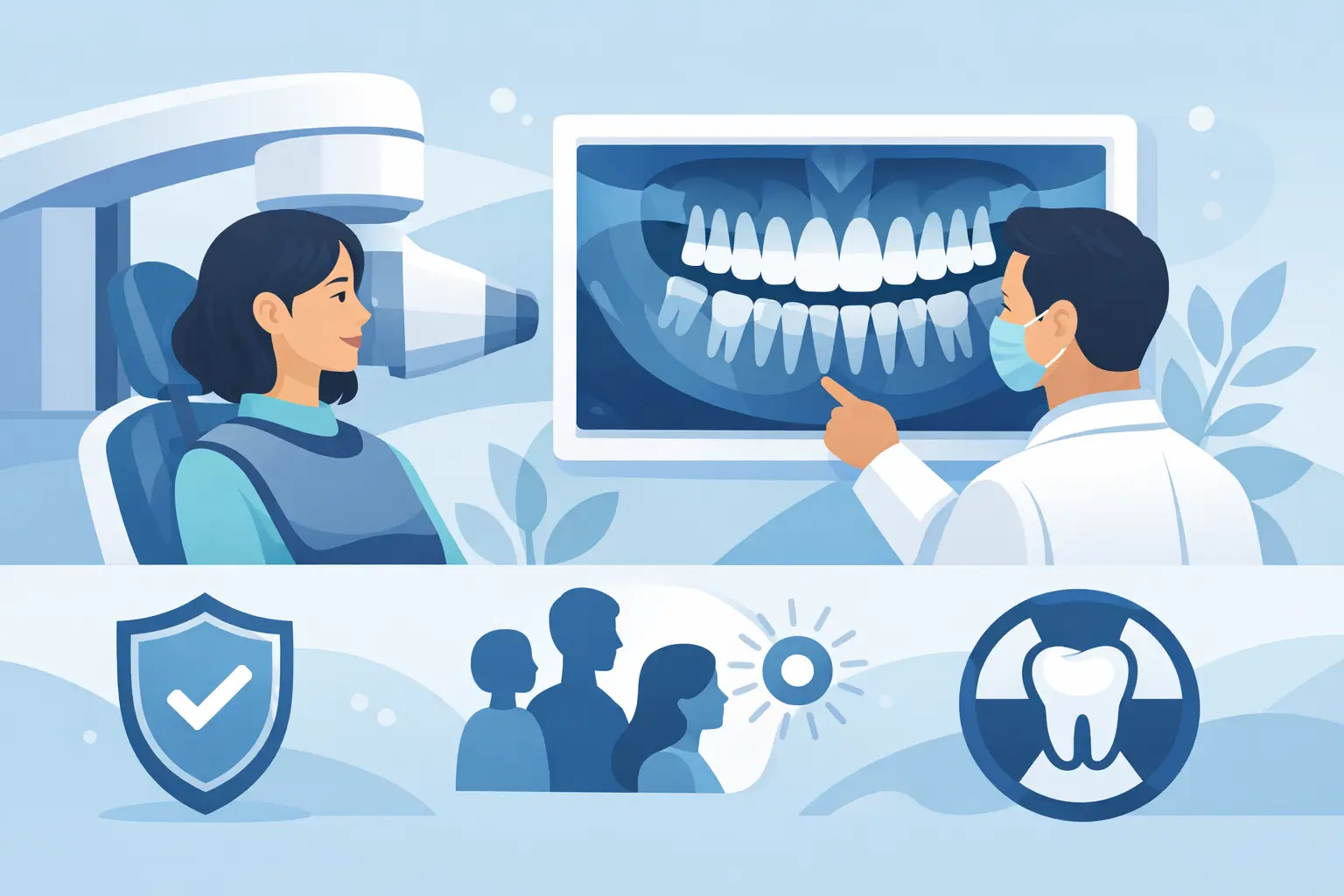
A cavity can grow between two teeth without causing pain, and early gum disease can damage bone below the gumline where no mirror can see it. That is why patients often ask, are dental x rays safe? The short answer is yes: when they are recommended for a specific clinical reason and taken with modern equipment, dental X-rays use a very small amount of radiation and can help prevent larger, more costly problems.
At Parliament Street Dentistry, we want you to understand why an image is being suggested before it is taken. Dental care should feel clear and comfortable, whether you are bringing in a child for a first checkup or fitting an appointment into a busy workweek.
Are dental X-rays safe with modern technology?
Dental X-rays are considered safe for most patients because the radiation dose is low and dental teams take steps to keep exposure as limited as reasonably possible. Digital X-ray systems need less radiation than older film-based systems, and the image is available promptly for your dentist to review.
Radiation is part of everyday life. We receive small amounts from natural sources such as the ground, food, and air, as well as during travel. A dental X-ray adds a small amount to that background exposure. The exact dose depends on the type of image, the equipment used, and the area being examined. A single small image inside the mouth uses less radiation than a larger panoramic image, while a 3D cone beam scan can use more and is reserved for situations where the added detail will change treatment planning.
The goal is not to take images routinely without thought. It is to take the right image at the right time. Your dentist should consider your symptoms, oral health history, cavity risk, age, previous images, and whether existing X-rays are recent enough to answer the question at hand.
Why a visual exam is not always enough
A dental exam is essential, but it cannot reveal everything. Teeth touch each other, gums cover the roots, and the jawbone sits beneath the surface. X-rays let your dentist assess areas that are otherwise hidden.
They may help identify decay between teeth, infection around a tooth root, bone loss linked to gum disease, changes around wisdom teeth, impacted teeth, cysts, or problems beneath an old filling or crown. For children, images can also help show how permanent teeth are developing and whether there is enough room for them to come in properly.
Finding a problem early can mean a smaller filling instead of a root canal, or monitoring a developing issue before it becomes painful. That benefit is part of the safety conversation. Avoiding all X-rays can sometimes delay diagnosis until treatment becomes more involved.
How dentists reduce radiation exposure
Dental offices follow the principle of using the lowest exposure that can still produce a useful diagnostic image. This is sometimes called ALARA, meaning “as low as reasonably achievable.” It guides decisions before, during, and after imaging.
Your dental team reduces exposure by using digital sensors, carefully positioning the machine, limiting the beam to the area that needs to be examined, and avoiding unnecessary repeat images. A properly positioned sensor matters because it helps create a clear image on the first attempt.
Protective shielding may also be used based on the type of image, office protocols, and patient needs. Equipment and recommendations can change over time, so it is reasonable to ask what safeguards are used at your visit. A good answer should be straightforward: what image is needed, what it will show, and why it is appropriate for you.
How often should you have dental X-rays?
There is no one schedule that fits every patient. Someone with a history of frequent cavities, active gum disease, tooth pain, extensive dental work, or a new concern may need images more often than someone with stable oral health and a low risk of decay.
For example, bitewing X-rays are commonly used to check for cavities between back teeth. A dentist may recommend them at intervals based on your risk level rather than automatically every year. A full-mouth series or panoramic image is usually needed less often, unless there is a new concern or treatment being planned.
If you are visiting a new office, ask whether recent images from your former dentist can be reviewed. In many cases, usable existing X-rays can prevent duplication. If your dentist recommends new ones, ask what has changed or what information the current images cannot provide. You deserve a clear explanation, not pressure.
What if you are pregnant or trying to become pregnant?
Tell your dental team if you are pregnant, think you may be pregnant, or are trying to conceive. This helps your dentist plan care thoughtfully. Necessary dental X-rays can generally be taken during pregnancy with appropriate precautions, particularly when there is pain, swelling, suspected infection, or an urgent treatment need.
Dental infections should not be ignored during pregnancy. Delaying needed diagnosis and treatment can create its own risks. At the same time, non-urgent imaging may be postponed when it makes clinical sense. The right choice depends on the reason for the image and your individual situation.
If you have questions about a recommendation during pregnancy, your dentist can explain the expected benefit and whether waiting is a reasonable option. Your prenatal care provider can also be part of the conversation when needed.
Are dental X-rays safe for children?
Children are more sensitive to radiation than adults, which is one reason dentists are especially careful about imaging decisions. But children can develop cavities quickly, and decay between baby teeth is often not visible during a regular exam. When an X-ray is needed, digital technology, careful positioning, and child-sized settings help limit exposure.
A child does not need X-rays simply because they have reached a certain birthday. The recommendation should be based on what the dentist can see, the child’s cavity risk, whether teeth are touching, dental development, symptoms, and prior imaging. Parents are always welcome to ask why an image is recommended and what it will help the dentist check.
When a 3D dental scan may be recommended
Most routine dental care does not require a 3D cone beam CT scan. These scans provide detailed views of teeth, bone, nerves, and sinuses, but they typically involve more radiation than standard dental X-rays. For that reason, they are used selectively.
Your dentist may recommend a 3D scan when planning a dental implant, evaluating an impacted tooth, assessing a complicated root canal concern, investigating jaw issues, or preparing for certain oral surgery procedures. The additional information can improve accuracy and help avoid important structures, such as nerves in the jaw. If a 3D scan is suggested, it is reasonable to ask how the result will affect the treatment plan.
Questions worth asking before an X-ray
You do not need technical training to take part in your care. If you are unsure, ask your dental team: What are you looking for? Is this image needed today? Do you have recent images that can be used? What might happen if we wait? These questions support an informed decision and a conversation that fits your health needs.
Cost can also be a concern, particularly when several images are recommended. Ask for a clear explanation of anticipated costs before treatment. Parliament Street Dentistry accepts all insurance plans and offers direct insurance billing, helping make the administrative side of dental visits easier to manage. Coverage varies by plan, so the office can help you understand the practical next steps before you proceed.
A practical approach to safer dental imaging
The safest approach is neither “X-rays every time” nor “never X-rays.” It is individualized imaging: only when the information is likely to help diagnose, monitor, or plan treatment. Keep your regular checkups, share your recent dental history, and let your dentist know about symptoms such as lingering sensitivity, swelling, a broken tooth, or pain when biting.
If an X-ray recommendation leaves you uncertain, bring up the concern before the appointment moves forward. A caring dental team will explain the reason in plain language and make space for your questions. That conversation can turn a source of anxiety into one more practical step toward protecting your smile.
One Comment
[…] right approach depends on how much inflammation and bone loss are present, which is why an exam and dental X-rays can be helpful. Early care is usually simpler, more comfortable, and less costly than waiting for […]