
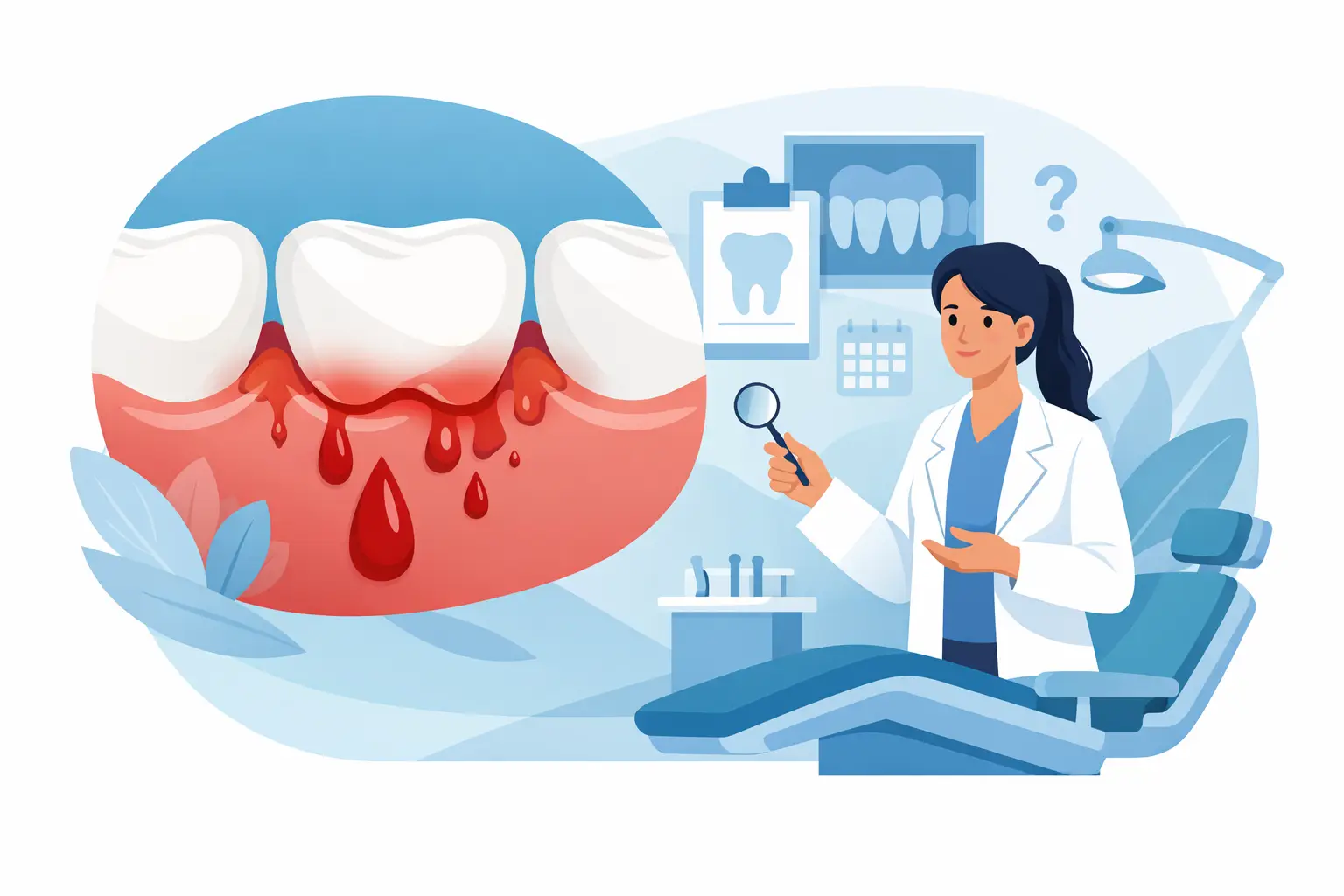
Seeing pink in the sink after brushing can be easy to dismiss, especially if it stops quickly. But gum bleeding causes are worth paying attention to. Healthy gums generally do not bleed during gentle brushing or flossing, so recurring bleeding is often your mouth’s way of asking for care.
The good news is that many causes are common and treatable, particularly when they are addressed early. A dental checkup can identify what is irritating your gums, help prevent a small problem from becoming a bigger one, and give you clear next steps for care at home.
Why Gums Bleed
Gums contain many small blood vessels. When plaque, bacteria, friction, or another irritation causes inflammation, those vessels become more likely to bleed. Bleeding may happen while brushing, flossing, eating crunchy foods, or even on its own when gum inflammation is more advanced.
One isolated episode after brushing too hard is not always a serious concern. Bleeding that returns day after day, however, should not be treated as normal. It may point to gum disease, buildup that cannot be removed at home, or a health factor that needs to be discussed with a dentist or physician.
Common Gum Bleeding Causes
Plaque buildup and gingivitis
Plaque is a sticky film of bacteria that forms on teeth throughout the day. If it is not removed thoroughly, it can irritate the gumline and lead to gingivitis, the earliest stage of gum disease. Common signs include bleeding when brushing or flossing, red or swollen gums, tenderness, and bad breath.
Gingivitis is very common, and it can often be reversed with a professional cleaning and consistent home care. The key is not to stop flossing because you see blood. Gentle daily flossing may make irritated gums bleed at first, but it also removes plaque between teeth where a toothbrush cannot reach. With proper technique and regular cleaning, bleeding should improve rather than continue indefinitely.
Hardened tartar along the gumline
When plaque remains on teeth long enough, it can harden into tartar, also called calculus. Tartar creates a rough surface where more plaque can collect, and it cannot be brushed or flossed away at home. It may sit above or below the gumline, keeping the tissue irritated and prone to bleeding.
A dental hygienist or dentist can remove this buildup safely. If your gums bleed despite regular brushing and flossing, tartar may be part of the problem, even if your teeth look clean in the mirror.
Early or advanced gum disease
Untreated gingivitis can progress to periodontitis, a more serious form of gum disease. As inflammation moves deeper below the gumline, it can damage the tissues and bone that support your teeth. Bleeding gums may be joined by persistent bad breath, gum recession, loose teeth, changes in how your bite feels, or pus around the gums.
Periodontitis needs professional treatment. The right approach depends on how much inflammation and bone loss are present, which is why an exam and dental X-rays can be helpful. Early care is usually simpler, more comfortable, and less costly than waiting for symptoms to worsen.
Brushing too hard or using the wrong tools
A firm toothbrush, aggressive brushing, or snapping floss down between teeth can injure gum tissue. This type of bleeding is often linked to a specific spot and may start after changing toothbrushes or brushing with extra force.
Choose a soft-bristled toothbrush and use small, gentle motions at the gumline. Brushing harder does not make teeth cleaner. It can wear down enamel near the gums and contribute to irritation or recession over time. If flossing is difficult, ask your dental team to show you a technique or tool that fits your needs.
A new flossing routine
People sometimes begin flossing after a long break, notice bleeding, and decide flossing is the cause. More often, flossing reveals inflammation that was already there. Gentle, daily cleaning between the teeth can help the gums heal as plaque is removed.
That said, bleeding should begin to settle after roughly one to two weeks of consistent, careful home care. If it does not, schedule a dental visit rather than pushing through discomfort or assuming it will resolve on its own.
Hormonal changes
Hormone shifts can make gums more sensitive to plaque. This can happen during puberty, pregnancy, menstruation, or menopause. Pregnancy-related gum inflammation is common, but it still deserves attention. Keeping up with dental cleanings and letting your dentist know about pregnancy can help protect both gum health and overall comfort.
Medications and health conditions
Some medications can increase bleeding, including blood thinners and certain antiplatelet medicines. Other medications may cause dry mouth or gum enlargement, creating conditions where plaque builds up more easily. Do not stop a prescribed medication because your gums bleed. Instead, tell your dentist and prescribing clinician about the symptom so they can coordinate appropriate care.
Less commonly, frequent gum bleeding can be associated with nutritional deficiencies, diabetes that is not well controlled, bleeding disorders, or other medical conditions. This does not mean bleeding gums automatically signal a serious health problem. It does mean a persistent symptom deserves a proper assessment, especially when it occurs alongside easy bruising, frequent nosebleeds, unusual fatigue, or bleeding elsewhere.
What the Pattern of Bleeding Can Tell You
The timing and location of bleeding can offer useful clues. Bleeding only when you brush one area may suggest local irritation, trapped food, tartar, or an injury. Bleeding around several teeth, particularly with swelling and bad breath, is more consistent with generalized gum inflammation.
Spontaneous bleeding, heavy bleeding, or bleeding that does not stop with gentle pressure is more urgent. A sore, lump, or patch in the mouth that does not heal within two weeks should also be examined. These symptoms have many possible explanations, but they should not be diagnosed from home.
What to Do When Your Gums Bleed
Start with a gentle, consistent routine for a few days. Brush twice daily for two minutes with a soft-bristled toothbrush and fluoride toothpaste. Clean between your teeth once a day with floss or another tool recommended by your dental professional. Be thorough but avoid scrubbing or forcing floss into the gums.
It also helps to look at the bigger picture. Smoking and vaping can worsen gum disease and may mask bleeding in some people by affecting blood flow to gum tissue. A balanced diet, good hydration, and managing conditions such as diabetes can support oral health, but they do not replace dental care when bleeding persists.
Avoid using mouthwash as a substitute for brushing and flossing. Some rinses may help with specific concerns, but the best choice depends on the cause of your symptoms. Strong or alcohol-based products can be uncomfortable for dry or irritated mouths, so ask your dental team before relying on one.
When to Book a Dental Appointment
Book a checkup if gum bleeding continues for more than a week or two despite gentle daily care, or if you have swelling, pain, bad breath, recession, loose teeth, or sensitivity. Schedule sooner if bleeding is heavy, happens without brushing or flossing, or comes with a mouth sore that is not healing.
For families, regular visits are especially useful because gum concerns can look different from one person to another. A child may be struggling to clean around crowded teeth or orthodontic appliances, while an adult may have tartar buildup, medication-related dry mouth, or early signs of gum disease. The right care should be based on the person, not a one-size-fits-all routine.
At Parliament Street Dentistry, patients can discuss symptoms, treatment options, and expected costs before care begins. The clinic accepts most dental insurance plans and offers direct insurance billing, helping make it easier to move from a worrying symptom to an appointment and a clear plan.
Bleeding gums are not something to ignore or feel embarrassed about. A timely dental visit can replace uncertainty with practical answers and help you get back to brushing, flossing, and smiling comfortably.