
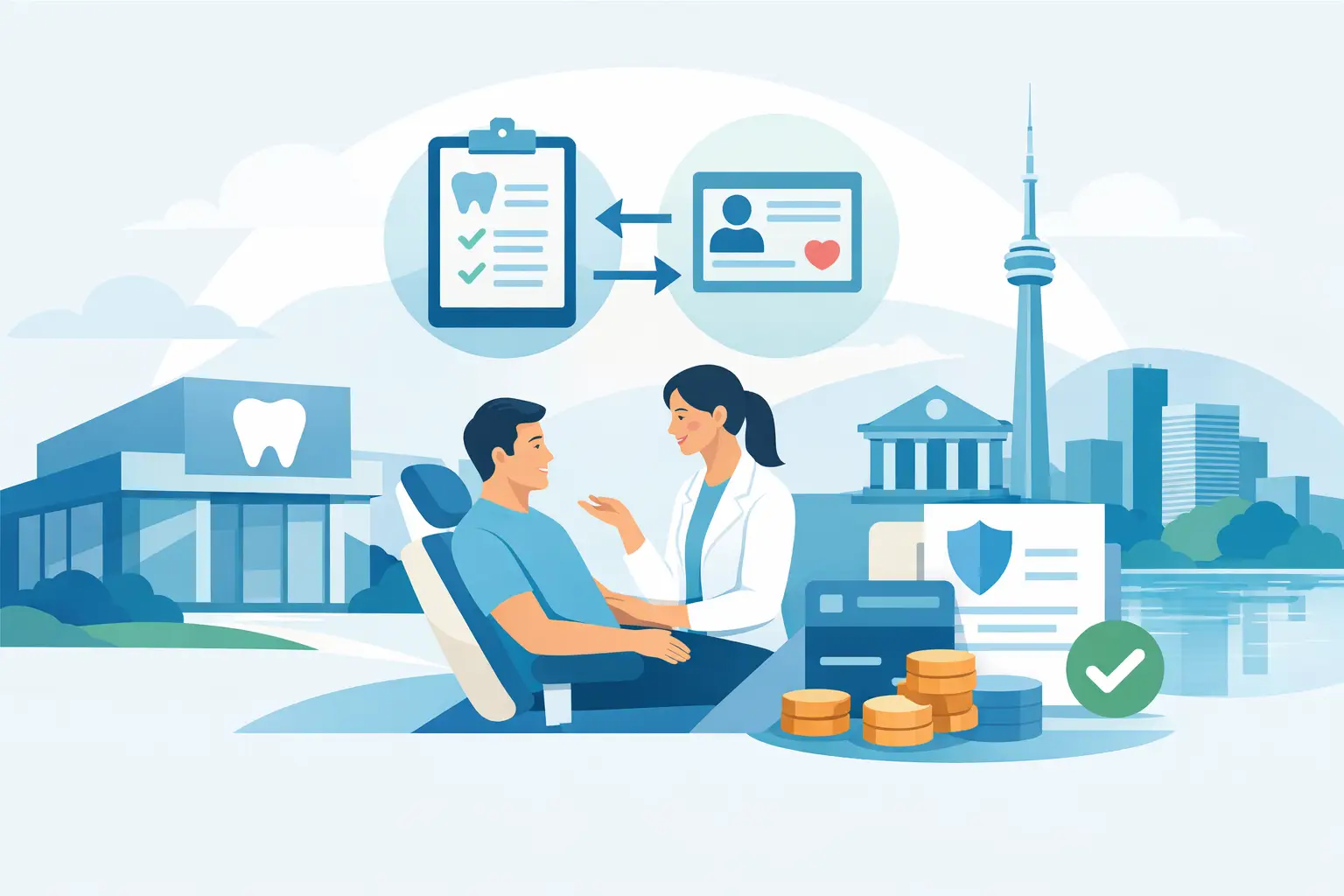
A dental appointment should not end with you sorting through claim forms at the kitchen table. Understanding how direct dental billing works can make it easier to plan care, use your benefits, and know what payment to expect before treatment begins.
At Parliament Street Dentistry, we accept most dental insurance plans and can bill your insurer directly. That means our team handles the claim submission on your behalf when possible, while you stay informed about the portion your plan does and does not cover.
How direct dental billing works at your appointment
Direct billing, sometimes called assignment of benefits, is a process where the dental office submits a claim to your insurance provider after your visit. Instead of paying the full treatment cost and waiting to be reimbursed, the insurance company sends the eligible benefit payment directly to the dental office.
Before your appointment, you will be asked for your insurance information. This usually includes the name of your insurer, your plan or policy number, your member or certificate number, and the name of the policyholder if the plan is through a parent, spouse, or employer. Bringing your benefit card or a clear photo of it can help us enter the details correctly.
After your checkup or treatment, our team prepares and submits the claim using the services provided and the information available from your plan. Your insurer reviews the claim and determines the amount payable under your coverage. The office receives that payment, and you pay any remaining balance.
For many routine visits, this can be a straightforward process. Still, direct billing is not the same as guaranteed coverage. Your insurance provider makes the final decision about what it will pay.
What you may need to pay yourself
Your out-of-pocket cost depends on your individual plan, the treatment you receive, and whether you have available coverage remaining. Even when a dental office bills insurance directly, patients are generally responsible for the portion not paid by their plan.
This may include a deductible, which is an amount you pay before certain benefits apply. It may also include coinsurance, where your plan pays a percentage and you pay the rest. For example, a plan may cover part of a filling but not the entire fee.
Annual maximums are another common factor. Many dental plans set a maximum amount they will pay in a benefit year. Once that amount has been used, additional treatment may become your responsibility until the plan renews. If several family members share a plan, it is also worth confirming whether each person has separate limits or whether certain services have their own maximums.
Some plans place limits on frequency. They may cover a cleaning or exam only after a set number of months, even if your dentist recommends a visit sooner based on your oral health needs. Other services can have waiting periods, age limits, or requirements for prior approval.
Why an estimate is helpful before treatment
A clear conversation about cost is part of feeling comfortable with dental care. For treatment beyond a routine exam or cleaning, the dental team may be able to submit an estimate to your insurer before work begins. This is often called a predetermination or pre-treatment estimate.
The estimate gives your insurer a chance to review the planned treatment and explain the benefit amount they expect to pay. It can be especially useful for procedures with higher costs, such as crowns, root canal treatment, bridges, dentures, or more extensive restorative care.
An estimate is not always required, and it is not a promise of final payment. Your eligibility can change, benefits may be used by another provider before the treatment date, and insurers can apply plan rules differently after reviewing the final claim. Even so, it provides useful information for planning and helps avoid surprises.
If you are concerned about the cost of recommended care, ask before your appointment or during your consultation. A good dental office should explain the proposed treatment, discuss expected fees, and help you understand the information received from your insurance provider. When needed, financial arrangements may also be discussed before treatment starts.
What direct billing does not change
Direct billing makes the administrative side of dental care easier, but it does not replace your relationship with your insurance provider. Your benefits are a contract between you, or your employer, and the insurer. The dental office can submit claims and help interpret the information available, but it cannot change coverage rules or guarantee payment.
It also does not determine what dental care you need. Insurance plans may not cover every service, or they may cover a less expensive alternative. Your dentist’s recommendation should be based on your oral health, comfort, and long-term needs, not only on the limits of a benefit plan.
For example, an insurer may cover a portion of a treatment after specific conditions are met, while your dentist may recommend care sooner to prevent a problem from becoming more complex. This does not mean you have to make a rushed decision. It means it is useful to have an open conversation about the clinical recommendation, your timeline, your coverage, and your budget.
How to make the billing process smoother
The best way to avoid delays is to provide current insurance information every time something changes. A new job, a different insurer, a plan renewal, or changes to a spouse’s coverage can all affect claim processing. Let the office know before your visit if you have received a new benefits card or if your coverage has ended.
If you have more than one dental plan, mention both. Coordination of benefits may allow one plan to cover some costs after the other plan has paid. The order in which plans are billed follows insurance rules, not simply the plan with the better coverage. In many cases, your own employer plan is billed first, followed by coverage through a spouse or parent. The office can submit information as required, but the insurers decide how coordination applies.
It is also helpful to know a few details before you arrive: your annual maximum, whether you have used benefits recently, and whether your plan has limits for major treatment. You do not need to become an insurance expert. A quick review of your benefits portal or a call to your insurer can give you a clearer starting point.
Keep in mind that claim processing can occasionally take longer than expected. If an insurer requests more information, denies a portion of a claim, or adjusts a payment after submission, a balance may remain. The dental office should let you know if follow-up is needed and explain the balance in plain language.
Questions worth asking before your visit
If direct billing is new to you, asking a few practical questions can bring peace of mind. You may want to ask whether the office can submit claims to your particular insurer, whether a pre-treatment estimate is recommended, and what payment may be due on the day of your visit.
For treatment that involves several appointments, ask how billing will be handled at each stage. You can also ask whether your plan’s available maximum has been checked and whether there are timing rules that could affect coverage. These are normal questions, and they are easier to address before treatment than after a claim has been processed.
Parents booking care for children may also want to confirm whose insurance information is on file and whether the child is still eligible under the family plan. Young adults, recent graduates, and people changing jobs often discover coverage changes only when they need an appointment, so it is wise to check early.
A simpler path to dental care
Direct insurance billing is meant to reduce paperwork, not add uncertainty. When your dental office submits claims directly and discusses expected costs before treatment, you can spend less time managing forms and more time focusing on your family’s oral health.
If you are due for a checkup, have a treatment recommendation, or need a new family dentist in Toronto, bring your current insurance information and ask questions early. A clear conversation before your appointment can make the next step toward a healthy smile feel much more manageable.
3 Comments
[…] situation. Parliament Street Dentistry works with patients to discuss treatment needs and handle direct insurance billing whenever […]
[…] handles insurance, whether it accepts your plan, and whether it can bill the insurer directly. Direct insurance billing can reduce paperwork and help you understand your expected portion […]
[…] insurance coverage before moving forward. The clinic accepts most dental insurance plans and offers direct insurance billing, helping make the practical side of care easier to […]