
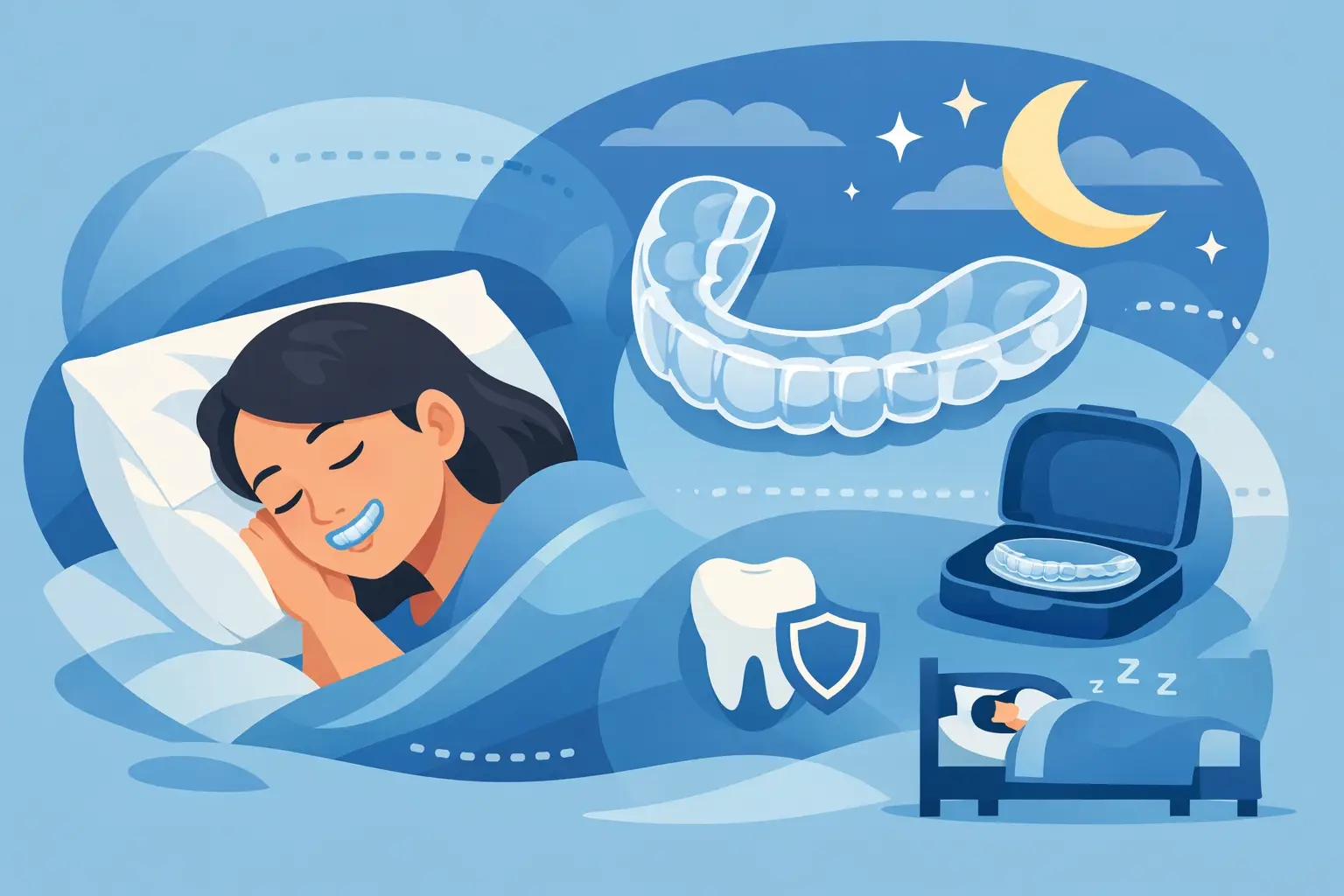
Waking up with a tight jaw, a dull headache, or teeth that feel sore can make a full night of sleep feel anything but restful. This guide to dental night guards explains how these simple oral appliances can help protect your teeth from nighttime grinding and clenching, what type may suit you, and when it is time to speak with a dentist.
What Is a Dental Night Guard?
A dental night guard is a removable appliance worn over your teeth while you sleep. It creates a protective layer between the upper and lower teeth, helping limit the damage caused by grinding or clenching. Dentists often call these habits bruxism.
Many people do not realize they grind their teeth because it happens while they are asleep. A partner may hear grinding sounds, but just as often, the first signs are a sore jaw in the morning, worn tooth edges, tooth sensitivity, or recurring headaches. Some people also notice that their jaw clicks or feels tired after chewing.
A night guard does not necessarily stop the muscle activity that causes clenching. Its main job is to protect teeth, dental work, and jaw joints from excessive pressure. That distinction matters. A night guard can be very helpful, but ongoing pain or severe grinding still deserves a proper dental evaluation.
Why Teeth Grinding Should Not Be Ignored
Teeth are strong, but they are not meant to handle hours of heavy pressure every night. Over time, grinding can flatten or chip teeth, wear through enamel, loosen fillings, and damage crowns, veneers, or implants. Once enamel is lost, it does not grow back.
The effects can be gradual. You may not notice a problem until a tooth cracks, a filling breaks, or cold drinks suddenly cause sharp sensitivity. Addressing grinding early may help you avoid more complex treatment later.
Stress can play a role in nighttime clenching, but it is not the only possible cause. Bite changes, certain medications, alcohol use, sleep issues, and jaw joint concerns may contribute. Your dentist can look for patterns of wear and discuss whether a night guard is appropriate for your situation.
Types of Dental Night Guards
Night guards are not one-size-fits-all. The best choice depends on how much you grind, the condition of your teeth, your bite, and any existing dental treatment.
Custom-Fitted Night Guards
A custom night guard is made from an impression or digital scan of your teeth. Because it is designed for your bite, it usually fits more securely and feels more comfortable than a store-bought option. A dentist can also choose the material and thickness based on whether your grinding is mild, moderate, or heavy.
For many patients, this is the most reliable long-term choice. It is especially worth considering if you have crowns, bridges, veneers, implants, significant tooth wear, jaw pain, or a history of breaking dental work. A properly fitted guard should stay in place without feeling bulky or making it difficult to breathe.
Store-Bought and Boil-and-Bite Guards
Over-the-counter guards are widely available and can seem like a quick answer. Some are soft and ready to wear, while boil-and-bite versions are softened in hot water and shaped at home.
These products may offer short-term protection for occasional, mild grinding. However, they can be bulky, wear out quickly, or fit unevenly. A loose guard may be uncomfortable enough that you stop wearing it. In some cases, a poorly fitting appliance can also place pressure on the wrong areas of your bite.
If you are using an over-the-counter guard because you are waiting for an appointment, bring it with you. Your dentist can check how it fits and help you decide whether a custom appliance would better protect your smile.
Soft, Hard, and Dual-Laminate Materials
Soft guards can feel easier to adjust to, particularly for people with light clenching. Hard acrylic guards tend to be more durable and are commonly recommended for heavier grinding. Dual-laminate guards have a softer inner layer with a harder outer surface, offering comfort along with added strength.
There is no single best material for every person. A thicker guard is not automatically better, and a soft guard is not always the most comfortable over time. The right design is one that protects your teeth, fits your bite, and is practical for you to wear consistently.
How a Custom Night Guard Is Made
Getting a custom night guard is usually straightforward. During a dental visit, your dentist will examine your teeth, gums, bite, and jaw. They may look for cracked teeth, worn enamel, tender jaw muscles, or damage to existing restorations.
An impression or digital scan is then taken and used to create a guard that matches your teeth. At the fitting appointment, the dentist checks the appliance for comfort, retention, and balanced contact when you close your mouth. Small adjustments can make a meaningful difference.
This professional oversight is valuable because grinding symptoms can overlap with other concerns. For example, tooth pain may come from a cavity or crack rather than clenching alone. Jaw discomfort may also be connected to a temporomandibular joint issue, often called TMJ or TMD. A night guard may be part of the plan, but it should not replace a diagnosis.
How to Wear and Care for Your Night Guard
Wear your night guard as directed, usually every night. It may take a few nights to get used to having it in your mouth, but it should not cause pain, gagging, or major bite changes. If it feels too tight, loose, sharp, or uncomfortable, call your dental office rather than trying to reshape it yourself.
Clean the guard each morning with a soft toothbrush, cool water, and a mild soap or cleaner recommended by your dentist. Avoid hot water, which can warp many materials. Let it air dry completely before placing it in its protective case.
Keep the case clean, and do not leave the guard where pets can reach it. Dogs are particularly skilled at finding and chewing dental appliances. Bring your guard to regular checkups so your dentist can inspect it for cracks, wear, and fit changes.
A night guard will not last forever. Heavy grinding can wear through even a well-made appliance. If you see holes, deep grooves, cracks, or changes in how it fits, schedule a visit. Replacing a worn guard is often far easier than repairing a damaged tooth.
When to See a Dentist About Grinding or Jaw Pain
Schedule a dental appointment if you regularly wake with jaw pain or headaches, notice chips or flattening on your teeth, experience new sensitivity, or hear yourself grinding at night. You should also be seen promptly for a cracked tooth, swelling, severe pain, or a guard that no longer fits.
If you snore loudly, gasp during sleep, or feel very tired during the day, mention that as well. Teeth grinding can sometimes occur alongside sleep-related breathing concerns. Your dentist may recommend discussing those symptoms with your physician or a sleep specialist.
At Parliament Street Dentistry, patients can discuss symptoms, treatment choices, expected costs, and insurance coverage before moving forward. The clinic accepts most dental insurance plans and offers direct insurance billing, helping make the practical side of care easier to manage.
A Night Guard Is Protection, Not a Reason to Wait
A dental night guard can be a practical way to protect your smile from the daily effects of clenching and grinding. The right one should feel comfortable, fit properly, and be checked regularly as your teeth and bite change over time.
If morning jaw soreness, headaches, or worn teeth are becoming familiar, do not wait for a chip or cracked tooth to force the issue. Book a dental checkup and ask whether a custom night guard could help you sleep more comfortably and protect your teeth for the long term.