
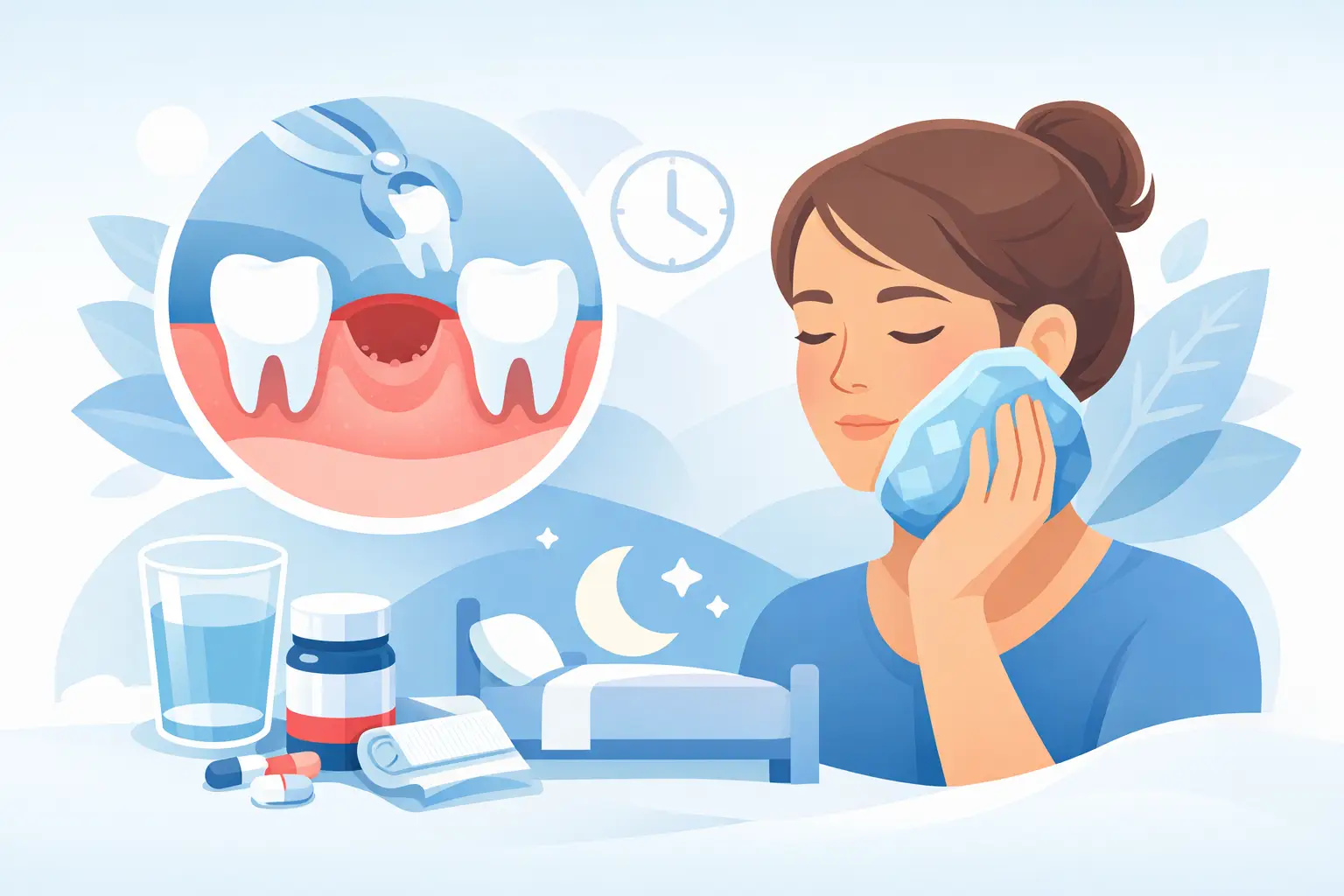
The first few hours after a tooth is removed can feel unfamiliar. Numbness fades, a gauze pad needs changing, and it can be hard to tell what is normal. This tooth extraction recovery guide explains what to do day by day, how to protect the healing area, and when a call to your dental office is the right next step.
Every extraction is a little different. A simple removal usually heals more quickly than a surgical extraction or wisdom tooth removal, and your dentist’s individual instructions should always come first. The goal is the same: protect the blood clot that forms in the socket. That clot is the foundation of early healing.
The First 24 Hours After a Tooth Extraction
Bite gently but firmly on the gauze your dentist provides. Light bleeding or oozing is common during the first several hours. Change the gauze as directed, usually once it is soaked, and avoid checking the area too often. Removing the gauze repeatedly can disturb the clot before it has a chance to settle.
Rest for the remainder of the day. Keep your head elevated with an extra pillow when lying down, and avoid exercise, heavy lifting, bending over, or anything that raises your heart rate. More activity can restart bleeding and increase swelling.
For discomfort, use the medication recommended by your dentist. Some patients do well with over-the-counter pain relief, while others may receive a prescription based on the procedure and their health history. Take medication only as directed, and ask before combining products, especially if you take blood thinners or have medical conditions that affect pain-relief options.
Cold packs can help during the first day. Hold a wrapped ice pack against the outside of your cheek for about 15 to 20 minutes at a time, then take a break. Never place ice directly on your skin or inside your mouth.
The most common recovery mistake is creating suction in the mouth. Do not use straws, spit forcefully, smoke, vape, or rinse vigorously for the first 24 hours. These actions can pull the blood clot loose and raise the risk of dry socket, a painful condition that needs dental care.
What to Eat During Tooth Extraction Recovery
Choose cool or lukewarm soft foods while the extraction site is tender. Yogurt, applesauce, scrambled eggs, mashed potatoes, soup that has cooled down, oatmeal, smoothies eaten with a spoon, and soft pasta are often comfortable choices. If you are still numb, take extra care with hot foods and drinks so you do not accidentally burn your mouth.
Chew on the opposite side when possible. Avoid sharp, crunchy, sticky, or small foods that can collect in the socket, such as popcorn, chips, nuts, seeds, and crusty bread. Alcohol can interfere with healing and may not be safe with pain medications, so skip it until your dentist says otherwise.
Hydration matters, but drink from a cup. If eating feels difficult the first day, focus on fluids and soft foods rather than pushing through a full meal. Most people can slowly return to more familiar foods as soreness improves, often over several days. For a complicated extraction, that transition may take longer.
Days 2 Through 3: Swelling and Gentle Cleaning
Mild swelling, tenderness, and jaw stiffness often peak around the second or third day. This does not automatically mean something is wrong. Continue taking medications as recommended and give yourself time to rest. After the first 24 hours, a warm saltwater rinse can help keep your mouth clean. Gently let the water move around your mouth, then allow it to fall out without forceful spitting.
Brush the rest of your teeth as usual, but stay away from the extraction site at first. Keeping the surrounding mouth clean lowers the chance of food buildup and supports healing. Your dentist may give you special instructions if you had stitches, a bone graft, or a surgical extraction.
Do not assume that a smaller-looking opening means the area is fully healed. Gum tissue starts closing fairly quickly, but deeper healing takes longer. Be patient with the area even after pain has eased.
Days 4 Through 7: Returning to Your Routine
By the fourth day, many patients notice that discomfort is improving and swelling is beginning to settle. You can usually add more foods as you feel comfortable, but continue to avoid anything that causes pressure, sharp pain, or gets trapped near the socket. Gentle activity may be fine if bleeding has stopped and you feel well, though intense workouts should wait until your dentist has cleared you.
If you have dissolvable stitches, they may loosen or disappear over time. Do not pull at them. If you have stitches that need removal, keep the follow-up appointment. That visit gives your dentist a chance to confirm that the site is healing as expected.
Smoking and vaping deserve special attention. Both can slow healing and significantly increase the risk of dry socket. The longer you can avoid them after an extraction, the better for your recovery. If stopping is difficult, tell your dental team before treatment so you can discuss a realistic plan.
How to Recognize Dry Socket and Other Concerns
Some pain after an extraction is expected. Pain that becomes noticeably worse after a few days, rather than better, needs attention. Dry socket can happen when the clot is lost too early, leaving sensitive bone and nerve endings exposed. It is treatable, but home remedies will not fix it reliably.
Call your dentist promptly if you have any of these concerns:
- Bleeding that remains heavy after steady pressure with gauze or returns repeatedly
- Severe or worsening pain, especially pain that spreads toward the ear, temple, or jaw
- A bad taste or odor in the mouth along with increasing pain
- Fever, chills, pus, or swelling that worsens after the third day
- Numbness that continues longer than expected or difficulty opening your mouth
Seek urgent medical help for trouble breathing, trouble swallowing, rapidly spreading swelling, or signs of a serious allergic reaction. These symptoms are not part of routine recovery.
A Practical Tooth Extraction Recovery Guide for Families
For parents, recovery instructions can be harder to manage when a child feels hungry, tired, or anxious. Keep soft foods ready before the appointment and plan a quiet day at home. Follow the dentist’s medication directions carefully, using products and doses appropriate for the child’s age and weight. Encourage them not to poke the extraction area with fingers or their tongue.
Adults benefit from planning, too. Schedule the extraction for a time when you can rest, fill any prescribed medication before you get home, and arrange a ride if you have been told not to drive. Driving yourself home against your dentist’s advice can put both your safety and your recovery at risk.
If you have questions about costs, coverage, or treatment steps before an extraction, ask early. Clear answers help you make decisions without adding financial stress to an already uncomfortable situation. Parliament Street Dentistry works with patients to discuss treatment needs and handle direct insurance billing whenever possible.
When to Contact Your Dentist
You never need to wait for a scheduled follow-up if something feels wrong. Dental teams expect recovery questions, and a quick call can often prevent a small concern from becoming a more painful problem. Describe when the symptom started, whether it is improving or worsening, and what medication you have taken.
Healing is not about getting back to normal by a specific hour or day. It is about steady improvement, protecting the clot, and giving your body room to do its work. Take recovery one meal, one rinse, and one restful day at a time.