
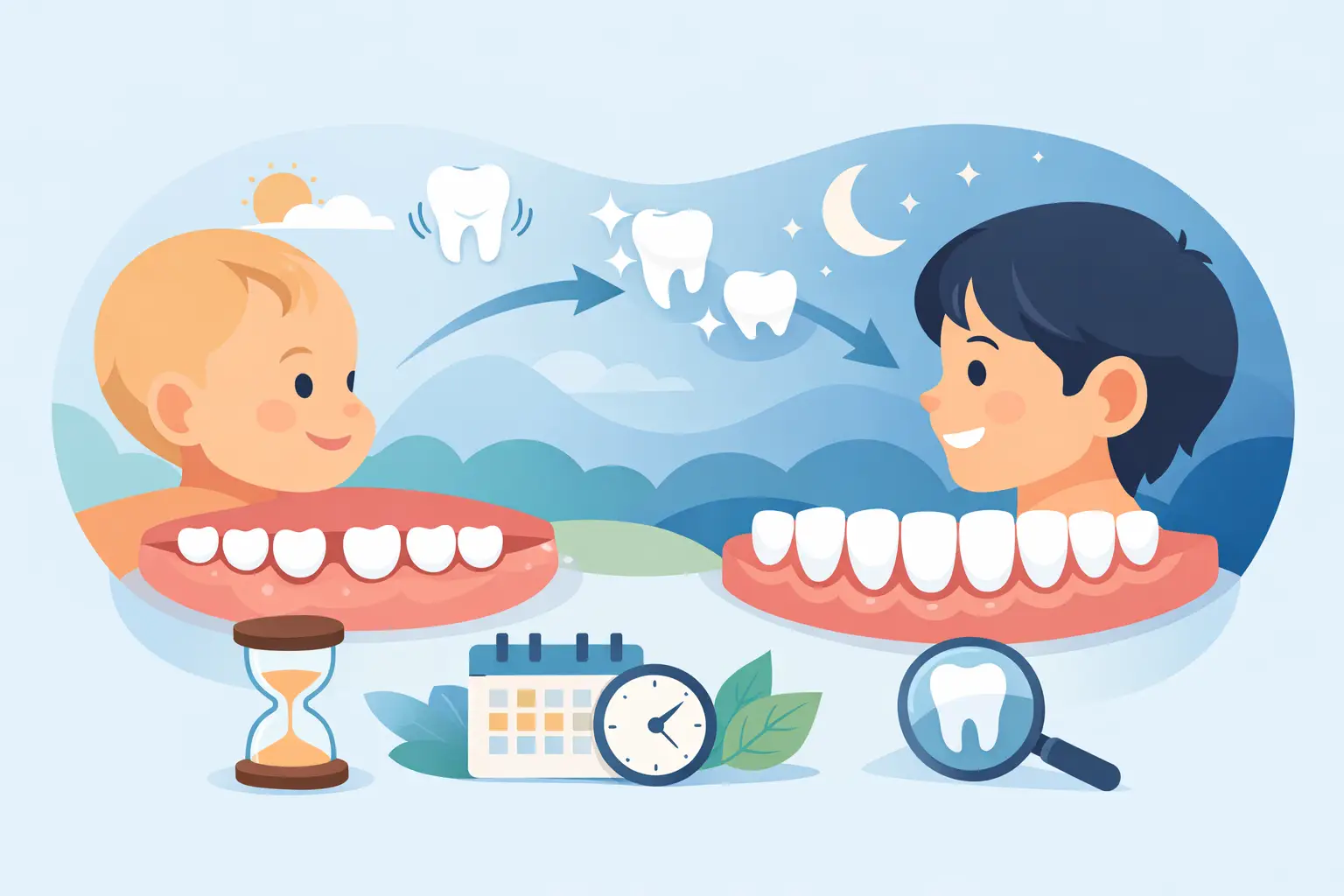
A wiggly tooth can feel like a major event for a child, especially when it is their first one. Parents often ask, when do baby teeth fall? Most children begin losing their primary teeth around age 6, but a healthy timeline can start as early as 4 or as late as 8. The order and pace matter more than hitting one exact birthday.
Baby teeth make room for permanent teeth, help children speak clearly, and support normal chewing and jaw development. That is why regular dental checkups remain useful even during this very normal transition. A dentist can confirm that adult teeth are coming in as expected and answer questions before a small concern becomes a stressful one.
When do baby teeth fall for most children?
Children usually lose their 20 baby teeth between ages 6 and 12. The first loose tooth often appears in kindergarten or early elementary school, while the final baby molars may not fall out until around age 12.
The lower front teeth are often first. They are followed by the upper front teeth, then the canine teeth and molars. However, children do not always follow the textbook order. One child may lose several teeth in quick succession, while another may go months between loose teeth. Both patterns can be normal.
The adult tooth underneath gradually dissolves the root of the baby tooth. As the root becomes shorter, the tooth starts to wiggle and eventually comes out. You may notice a small gap before the adult tooth appears, or you may see the new tooth arriving almost right away.
A general baby teeth timeline
A typical sequence looks like this:
- Ages 6 to 7: Lower and upper central incisors, the front teeth
- Ages 7 to 8: Upper and lower lateral incisors, beside the front teeth
- Ages 9 to 11: First baby molars and canine teeth
- Ages 10 to 12: Second baby molars
These ranges are guides, not deadlines. Genetics, overall development, and when baby teeth originally came in can all affect timing. Children who got their first baby teeth later than average may also lose them later.
What is normal when a baby tooth gets loose?
A loose baby tooth may wiggle for several weeks. It can feel uncomfortable when your child bites into an apple or brushes near the area, but it should not cause significant pain. Mild gum tenderness or a little bleeding when the tooth finally comes out is common.
Encourage your child to brush gently around the loose tooth and continue flossing where possible. Good daily care matters because the permanent tooth is developing beneath the gums and nearby teeth still need protection from cavities.
It is fine for children to wiggle a tooth with clean hands or their tongue if it is already loose. They should not force it out, tie it to a door, or pull hard on a tooth that is still firmly attached. Pulling too early can hurt the gums, cause unnecessary bleeding, and make a child anxious about future dental visits.
If a tooth is hanging by a tiny thread and your child wants help, wash your hands, place clean gauze around the tooth, and use a very gentle twist. If it does not come out easily, wait a few more days. There is rarely a need to rush.
Why adult teeth can look different
New permanent front teeth sometimes look bigger, more yellow, or slightly uneven compared with baby teeth. This is usually expected. Adult teeth contain more dentin, which gives them a warmer shade than the bright white appearance of baby teeth. Their edges may also have small bumps called mamelons when they first erupt. These often wear down naturally with normal biting and chewing.
You may also see an adult tooth coming in behind a baby tooth, particularly behind the lower front teeth. Parents sometimes call these shark teeth. In many cases, the baby tooth will loosen and fall out soon afterward. If it remains firm while the adult tooth continues to erupt, it is a good reason to schedule a dental visit.
Crowding can become more noticeable as permanent teeth arrive, but an early gap or crooked-looking tooth does not automatically mean your child will need orthodontic treatment. A dental exam helps assess how the teeth, jaws, and bite are developing over time.
When should you call a dentist?
Most baby tooth loss does not need treatment. Still, a few situations deserve professional advice. Contact a dentist if your child loses a tooth after a fall or other injury, particularly if they are younger than the usual age for that tooth to come out. A dentist should check the area and make sure the underlying permanent tooth has not been affected.
Also book an appointment if a loose tooth causes strong pain, swelling, pus, fever, or bleeding that does not stop with gentle pressure. These are not typical signs of normal tooth loss and may point to an infection or another issue that needs care.
It is also wise to ask about teeth that are unusually delayed. For example, if your child is 8 and has no loose teeth at all, or if one side is losing teeth while the matching tooth on the other side remains firmly in place for a long time, a dental exam can provide reassurance. X-rays may be recommended to check whether permanent teeth are present and positioned properly.
A permanent tooth that has erupted while the baby tooth remains solid, a tooth that looks very dark after an injury, or a baby tooth that is missing much earlier than expected are other reasons to call. The goal is not to assume the worst. It is to get a clear answer and protect your child’s developing smile.
Helping your child feel comfortable about losing teeth
For many children, the physical part is easy and the emotional part is bigger. They may worry that a loose tooth will hurt, be nervous about seeing blood, or dislike the feeling of a gap. Calm, matter-of-fact reassurance goes a long way.
Offer softer foods if chewing feels tender, such as yogurt, eggs, pasta, soup, or fruit cut into small pieces. A cold washcloth or cool water can soothe irritated gums. Avoid placing aspirin on the gums, as it can irritate tissue. If your child needs pain relief, follow guidance from their pediatrician or pharmacist for an age-appropriate option.
Keep the routine simple: brush twice daily with a fluoride toothpaste, floss where teeth touch, and attend regular checkups. Baby teeth still need care right up to the day they fall out. A cavity or infection in a baby tooth can cause discomfort and may affect the space needed for the adult tooth.
Regular checkups make the timeline easier
The years between the first loose tooth and the last baby molar bring many changes. Regular visits let a dentist track eruption, check for cavities, monitor spacing, and help your child become comfortable with dental care. For parents, they are a chance to ask practical questions without waiting for a problem.
At Parliament Street Dentistry, families can book child-friendly dental checkups and discuss any concerns about loose or delayed baby teeth. The team provides clear treatment information, accepts most dental insurance plans, and offers direct insurance billing to help make care easier to manage.
A loose tooth is usually a small sign of healthy growth, not an emergency. If something about your child’s timing, comfort, or new adult teeth does not seem right, a quick dental check can replace uncertainty with a clear next step.