
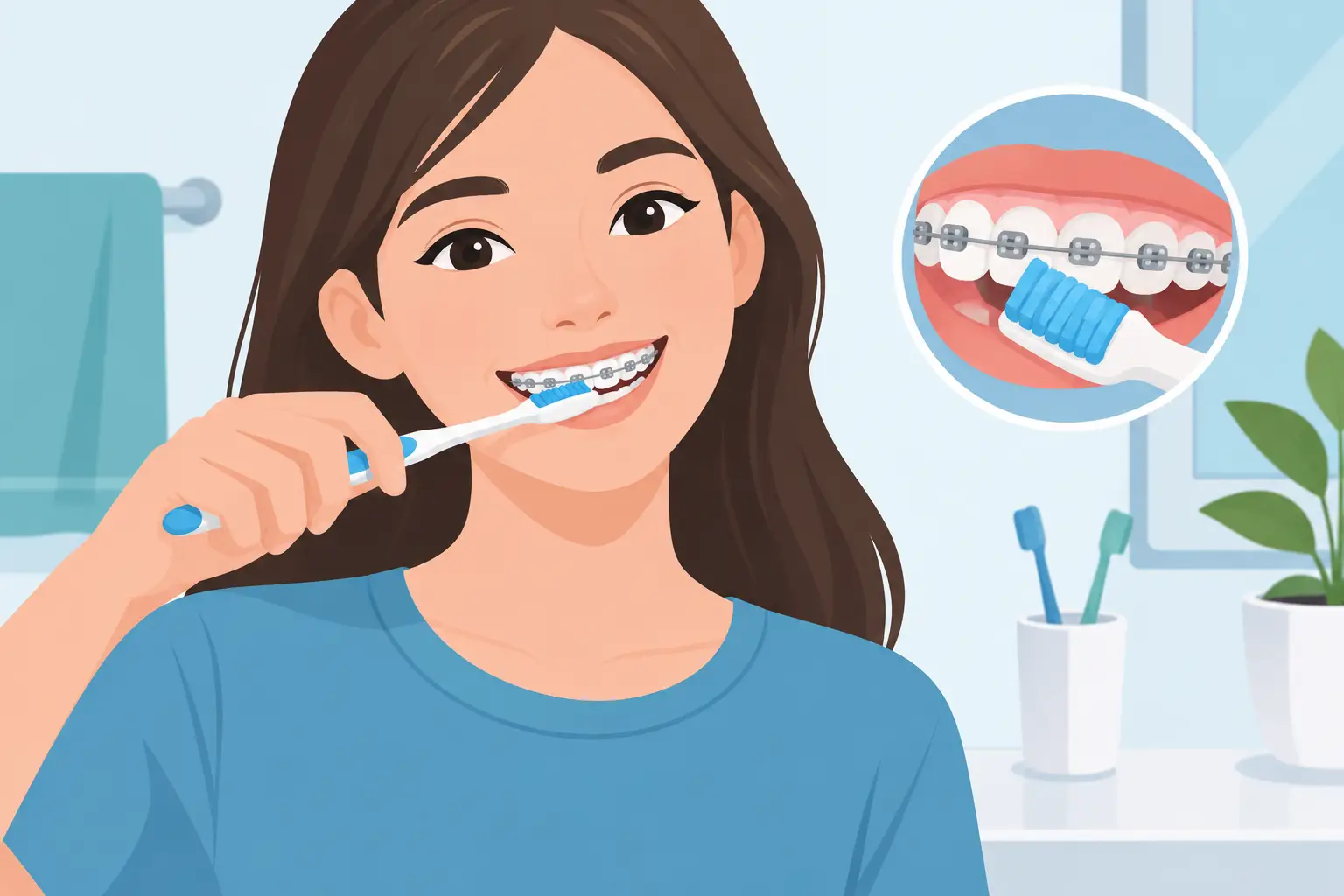
Food caught around a bracket can feel annoying within minutes. Left there until the next morning, it can give plaque extra time to build up around the very teeth you are working to straighten. Learning how to brush with braces is less about brushing harder and more about slowing down, using the right angles, and cleaning each part of the appliance.
Braces create small ledges around brackets and wires where plaque and food particles can hide. A consistent routine helps protect your gums, reduce the chance of white spots on your teeth, and keep your breath fresh throughout orthodontic treatment. It may take a few extra minutes, but those minutes are a worthwhile part of caring for your new smile.
How to Brush With Braces Step by Step
Brush at least twice a day, ideally after meals when you can. If brushing after lunch is not practical, rinse thoroughly with water and brush as soon as you get home. Before you begin, take a quick look in the mirror to remove any obvious food caught in your braces.
Use a soft-bristled toothbrush and fluoride toothpaste. An electric toothbrush can be a helpful option because its small head and timed brushing cycle may make it easier to clean carefully, but a manual soft toothbrush works well when used with good technique. The best choice is the one you will use consistently and correctly.
Start above the brackets
Hold the toothbrush at a 45-degree angle toward the gumline. Gently brush the front surfaces of your teeth above the brackets using small circular movements. Avoid pressing too hard. Firm scrubbing does not clean better, and it can irritate gums or wear down toothbrush bristles quickly.
Move slowly across every tooth rather than sweeping over several teeth at once. Pay special attention to the gumline, where plaque tends to collect. Healthy gums should not be ignored simply because the braces are the most visible part of your mouth.
Brush below the brackets and along the wire
Next, angle the brush upward toward the bottom edge of the brackets. Clean beneath the wire and around the lower sides of each bracket with short, gentle strokes. Then brush directly across the bracket faces and wire area.
This is the step people often rush. Brackets have edges on all sides, so brushing only straight across the front of your teeth leaves plaque behind. Work from one side of your mouth to the other and give every bracket attention.
Clean the chewing and inside surfaces
After cleaning the outer surfaces, brush the chewing surfaces of your back teeth. Use a back-and-forth motion in the grooves, where food can settle after meals. Then brush the inside surfaces of your upper and lower teeth. These areas do not have brackets, but they still need the same daily care.
Finish by gently brushing your tongue. This can help remove bacteria that contribute to bad breath. Rinse well, then check your teeth in the mirror. If you can see food around a bracket or wire, clean that spot again before you put your toothbrush away.
Give Yourself Enough Time
A standard two-minute brushing routine may not be enough while you have braces. Many patients need closer to three or four minutes to clean thoroughly around brackets, wires, and gumlines. A timer, a toothbrush with a built-in timer, or a favorite song can help you avoid rushing.
It also helps to divide your mouth into sections: upper right, upper left, lower right, and lower left. Clean above the brackets, below the brackets, and the chewing surfaces in each section before moving on. A predictable order makes it less likely that you will miss the back teeth or the areas near your gums.
Flossing Matters More Than Ever
Brushing removes plaque from the visible surfaces of teeth, but it cannot fully clean between them. Floss once a day, preferably before bed, so food and plaque are not left between your teeth overnight.
With braces, regular floss needs to pass under the wire before it can go between the teeth. A floss threader can make this easier. Thread the floss under the wire, guide it gently between two teeth, and curve it into a C shape against one tooth before sliding it up and down. Repeat against the neighboring tooth, then move to the next space.
This takes patience, especially during the first few weeks. If traditional flossing feels difficult, an orthodontic floss pick, water flosser, or interdental brush can be useful additions. They do not all do exactly the same job. A water flosser is excellent for dislodging food around braces, while floss is especially helpful for cleaning tooth-to-tooth contact areas. Your dentist or orthodontist can recommend the combination that fits your needs.
Keep a Small Braces Care Kit With You
Braces make after-meal cleanup more helpful, particularly after foods that stick easily around wires. A small pouch in a backpack, desk drawer, or bag can make it easier to handle food debris before it becomes a longer problem.
Consider keeping a travel toothbrush, fluoride toothpaste, floss threaders or floss picks, an interdental brush, and orthodontic wax in your kit. If you cannot brush, rinse your mouth thoroughly with water. Avoid using sharp objects to pick food from your braces, since they can injure your gums or damage the appliance.
Watch for White Spots and Gum Changes
White, chalky-looking marks near brackets can be an early sign that enamel has lost minerals. They are not the same as food debris, and they may become more noticeable after braces come off. Daily fluoride toothpaste, careful brushing, flossing, and regular professional cleanings all help lower the risk.
Swollen gums, bleeding that does not improve, persistent bad breath, or tenderness can also signal that plaque is building up. A little bleeding can happen when you first begin flossing more thoroughly, especially if your gums are inflamed. Keep cleaning gently and consistently, but contact your dental office if bleeding is heavy, painful, or ongoing.
Foods and Habits That Make Braces Harder to Clean
Some foods create more cleanup work than others. Sticky candy, chewy caramel, gum, and dried fruit can cling to brackets and wires. Popcorn kernels, nuts, hard candy, and ice may damage braces as well as get trapped around them. Your orthodontist may give you a more detailed list based on your treatment.
Sugary drinks and frequent snacking can also raise the risk of tooth decay because bacteria use sugar to produce acids. You do not need a perfect diet to care for your teeth, but it helps to limit how often you sip sweet drinks or snack throughout the day. Choose water when possible, especially between meals, and brush after consuming sugary foods or drinks.
When to Ask for Help
If a wire is poking, a bracket feels loose, or you cannot clean an area because part of your braces has shifted, call your orthodontist. Do not try to bend a wire or glue a bracket back in place yourself. Orthodontic wax may provide temporary comfort for an irritating wire, but the office should guide you on what to do next.
Regular dental checkups and cleanings remain essential during orthodontic treatment. Your orthodontist focuses on tooth movement, while your family dentist monitors your teeth, gums, and overall oral health. At Parliament Street Dentistry, we welcome patients and families who need preventive care during braces, with clear treatment discussions and direct insurance billing for most dental insurance plans.
A good braces routine does not need to be complicated. Brush carefully above and below every bracket, clean between your teeth each day, and ask for support when something does not feel right. Those small, steady habits help make the day your braces come off even more rewarding.