
A missing tooth can change more than your smile. You may start chewing on one side, avoid certain foods, feel self-conscious in photos, or notice nearby teeth shifting over time. If you need to replace teeth, the right solution depends on where the tooth is located, how many teeth are missing, the health of your gums and jawbone, and what feels manageable for your schedule and budget.
There is no single best option for every patient. A clear dental consultation gives you the chance to understand the choices, ask questions, and make a decision without pressure. At Parliament Street Dentistry, we discuss treatment costs before care begins and work with most dental insurance plans, including direct insurance billing when available.
Why replacing missing teeth matters
Some people assume they can leave one missing tooth alone, especially if it is not visible when they smile. In some cases, waiting may be appropriate while your mouth heals or while you consider treatment. But a gap can create practical changes over time.
Teeth beside the space may gradually tip inward. The opposing tooth may move down or up because it no longer has a tooth to bite against. This can affect how your teeth come together, make cleaning more difficult, and put extra pressure on other teeth. Missing back teeth can also make chewing less comfortable, while missing front teeth can affect speech and confidence.
Replacing a tooth is not only about appearance. It can help restore everyday function and support a more balanced bite. The timing and type of treatment should be based on your individual oral health, not a one-size-fits-all recommendation.
Ways to replace teeth
Modern dentistry offers several reliable ways to replace a single tooth, several teeth, or a full arch. Your dentist will examine your teeth, gums, bite, and bone support before recommending an option.
Dental implants
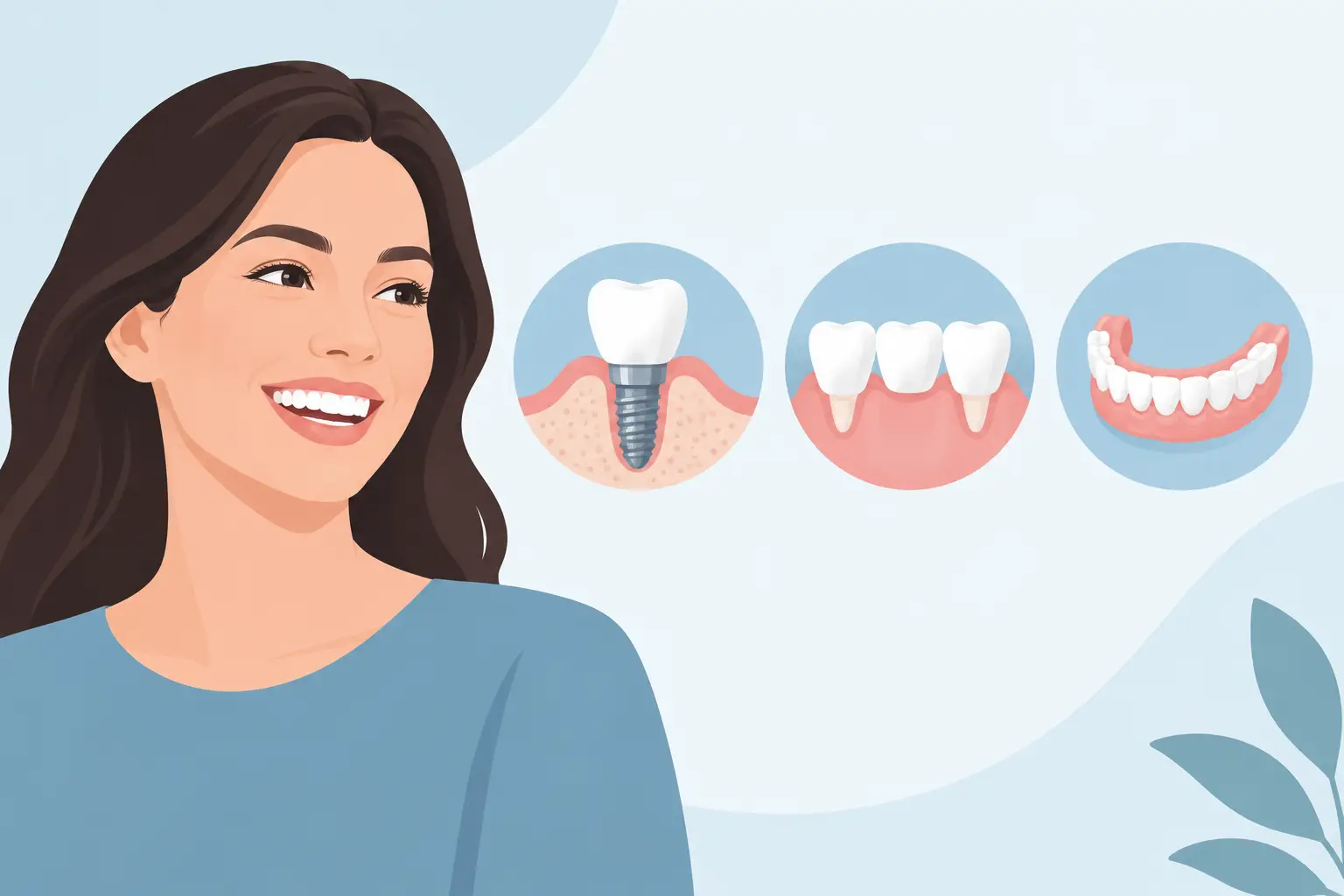
A dental implant replaces a missing tooth root with a small post placed in the jawbone. After healing, a custom crown is attached to create a tooth that looks and functions much like a natural one.
Implants are often a strong long-term choice because they do not rely on neighboring teeth for support. They can also help preserve bone in the area of the missing tooth. However, treatment takes time, often involves a surgical procedure, and may require healthy gums and enough jawbone. Some patients need bone grafting before an implant can be placed, which adds time and cost.
An implant may be used to replace one tooth, support a bridge for several missing teeth, or help stabilize a denture. It is a valuable option, but it is not automatically the right choice for every patient.
Dental bridges
A dental bridge fills a space by connecting a replacement tooth to the teeth on either side of the gap. In a traditional bridge, the supporting teeth are prepared for crowns, and the replacement tooth sits between them.
A bridge is fixed in place, so it does not come out for cleaning. It can often be completed more quickly than an implant and may be a practical choice when the teeth beside the gap already need crowns. The trade-off is that healthy adjacent teeth may need to be reshaped to support the bridge.
Bridges require careful cleaning underneath the replacement tooth. With good daily care and regular checkups, they can be a dependable solution for many years.
Partial dentures
A removable partial denture can replace one or several missing teeth. It is custom-made to fit around your remaining teeth and can be removed for cleaning and while you sleep, depending on your dentist’s instructions.
Partial dentures are generally less invasive than implants or fixed bridges and can be an accessible choice when several teeth are missing. They may also serve as a temporary option while you wait for implant treatment or healing after an extraction.
It can take time to adjust to a partial denture. Some patients notice minor changes in speech or eating at first, and the fit may need to be adjusted as your mouth changes. A well-made partial denture should feel secure and comfortable after the adjustment period.
Full dentures and implant-supported dentures
When all teeth in the upper or lower arch are missing, a full denture can restore the smile and improve chewing. Conventional dentures rest on the gums and are removable. They are carefully designed for fit, appearance, and function, but they can loosen as the jawbone changes over time.
Implant-supported dentures use dental implants to provide additional stability. Depending on the treatment plan, the denture may snap into place and remain removable for cleaning, or it may be fixed in place by the dentist. This option can improve confidence with eating and speaking, though it requires surgery and a larger treatment investment.
What to expect when you replace teeth
Your first visit should start with a conversation. Your dentist will ask about the missing tooth or teeth, any pain or sensitivity, your medical history, and what you want from treatment. Dental X-rays and an examination help identify concerns that are not visible from the surface, such as infection, bone loss, cracked teeth, or gum disease.
If a tooth needs to be removed, the plan may include replacement at the same visit or after a healing period. Immediate replacement is possible in certain situations, but not always. For example, active infection, limited bone support, or gum health concerns may mean it is safer to treat the area first.
Once you choose a treatment, appointments are scheduled around the steps involved. A bridge or denture may need impressions, fittings, and adjustments. Implant treatment includes placement, healing, and restoration with a crown, bridge, or denture. Your dentist should explain what each stage involves and how to care for the area between visits.
Choosing the option that fits your life
The best choice often comes down to a balance of health needs, timeline, appearance, maintenance, and cost. An implant may offer a long-lasting fixed option, while a bridge may be more suitable when nearby teeth already need restoration. A partial denture can be a practical answer when multiple teeth are missing or when you want a removable solution.
Ask direct questions during your consultation. How long will treatment take? What will it feel like to eat and speak? Will other teeth need to be altered? What care is needed at home? What are the costs now, and what maintenance may be needed later?
Clear answers matter. Dental care should not leave you guessing about the process or the financial side of treatment. If you have insurance, bring your plan information so the office can help review coverage and explain direct billing options. Coverage varies by plan, and knowing your expected portion before treatment helps you plan with confidence.
Caring for replacement teeth
Replacement teeth still need daily care. Brush twice a day with a soft toothbrush, clean between teeth as recommended, and keep regular dental checkups. Bridges need special attention under the replacement tooth, while dentures should be removed and cleaned according to your dentist’s instructions. Implants need the same consistent brushing and gum care as natural teeth.
Call your dentist if a bridge feels loose, a denture rubs your gums, an implant area becomes sore, or your bite changes. Small concerns are usually easier to manage when addressed early.
If a missing tooth is affecting how you eat, speak, or feel about your smile, booking a consultation is a practical next step. A thoughtful plan can help you move forward with a replacement option that suits your health, comfort, and daily life.