
A missing tooth can change more than the look of your smile. It can make chewing less comfortable, allow nearby teeth to shift, and leave you wondering how soon you need treatment. When comparing a dental bridge vs implant, the best choice depends on your mouth, your health, your timeline, and what feels manageable for your budget.
Both options can restore the space left by a missing tooth. Neither is automatically right for every patient. A clear conversation with your dentist can help you understand the treatment process, expected costs, insurance details, and the result you can realistically expect.
Dental Bridge vs Implant: The Main Difference
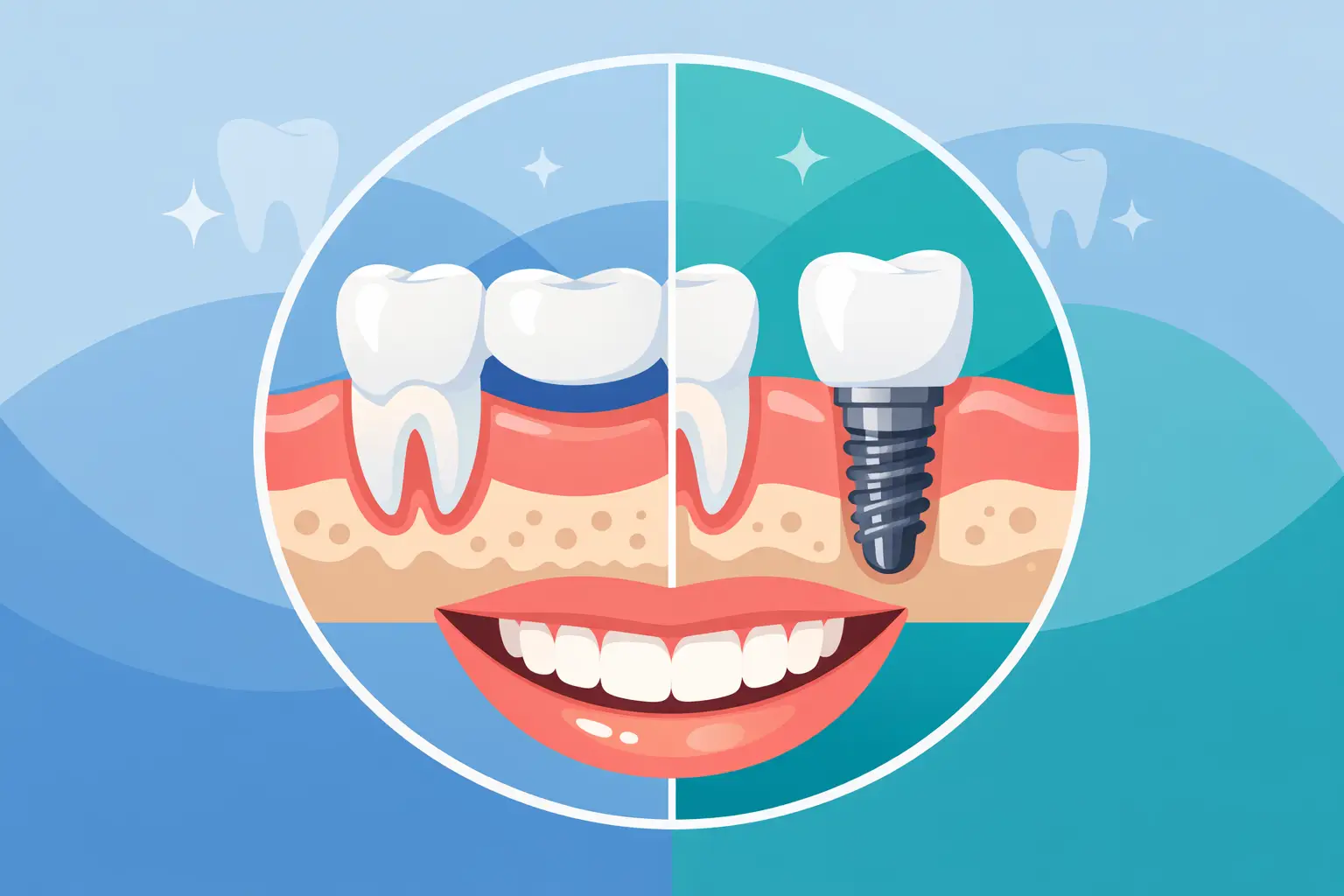
A dental bridge replaces a missing tooth by connecting an artificial tooth to crowns placed on the teeth beside the gap. The supporting teeth are shaped so the crowns can fit over them, holding the replacement tooth in place. A bridge is fixed in your mouth, meaning you do not remove it for cleaning.
A dental implant replaces the tooth root as well as the visible tooth. A small titanium post is placed into the jawbone, where it gradually bonds with the bone. Once the area has healed, your dentist attaches a connector and a custom crown that looks and functions like a tooth.
The key difference is support. A bridge relies on neighboring teeth, while an implant stands on its own in the jawbone. That distinction affects treatment time, cost, oral health considerations, and long-term maintenance.
When a Dental Bridge May Be the Better Choice
A bridge may be a practical option when you want to replace a tooth without a surgical procedure. Treatment can often be completed sooner than an implant because it does not require months of healing after post placement. For someone with an important event coming up or a busy schedule, that shorter timeline can matter.
A bridge can also make sense if the teeth on either side of the gap already need crowns because of large fillings, fractures, or extensive wear. In that situation, the crowns that support the bridge may address needs those teeth already have.
Cost is another common consideration. The upfront cost of a bridge is often lower than the cost of an implant and crown. Insurance coverage varies widely by plan, but some plans may provide a different level of coverage for a bridge than for an implant. Before treatment begins, ask for a clear estimate that separates your expected insurance payment from your out-of-pocket portion.
There are trade-offs. Preparing a bridge requires removing some enamel from the supporting teeth, even when those teeth are otherwise healthy. Bridges also do not replace the missing tooth root, so the bone beneath the gap may gradually shrink over time. Cleaning requires a little extra attention because you need to clean underneath the artificial tooth with a floss threader or another tool recommended by your dental team.
With consistent home care and routine dental visits, a bridge can serve patients well for many years. Its lifespan depends on factors such as bite pressure, gum health, cleaning habits, and the condition of the supporting teeth.
When a Dental Implant May Be the Better Choice
An implant is often appealing because it does not involve shaping the teeth next to the gap. It supports a single crown independently, which can help preserve healthy neighboring teeth. Because the implant post stimulates the jawbone during chewing, it can also help limit bone loss in the area where the tooth was lost.
Many patients appreciate that an implant crown is cleaned much like a natural tooth. You brush around it and floss as directed by your dentist. It does not connect to adjacent teeth, so there is no bridge space to clean beneath.
Implants are designed as a long-term solution, but they still need regular care. Gum disease, smoking, uncontrolled diabetes, heavy teeth grinding, and inconsistent cleaning can affect healing and long-term success. An implant crown may also need repair or replacement eventually, just as other dental restorations can.
The main drawback for some patients is time. After the implant post is placed, healing can take several months before the final crown is attached. In certain situations, additional treatment is needed first, such as a bone graft or gum treatment. That can extend the timeline and add to the overall cost.
Not every patient is an immediate implant candidate. Your dentist will evaluate the amount of available bone, the health of your gums, your bite, medical history, and the location of the missing tooth. Even if an implant is not the right choice today, it may become possible after preparatory care.
Cost, Insurance, and Treatment Planning
It is understandable to focus on cost when weighing a dental bridge vs implant. The better value is not always the treatment with the lowest initial fee. A bridge may cost less at the start, while an implant may offer advantages that matter over a longer period. At the same time, an implant is not automatically worth the added investment for every mouth or every budget.
The cost of either option can vary based on the tooth location, materials used, number of teeth being replaced, the condition of nearby teeth, and whether other care is needed first. For an implant, imaging, surgery, a bone graft, the implant post, and the final crown may be separate parts of treatment. For a bridge, the number of crowns and the complexity of the supporting teeth can affect the fee.
Insurance benefits can be confusing, especially when a plan treats implants and bridges differently. Ask your dental office to review your plan and provide direct billing when available. It is also helpful to ask whether the treatment estimate includes all expected stages and what costs could change if additional care becomes necessary. Clear information before treatment helps you make a decision without surprises.
How to Decide With Your Dentist
The choice is rarely just about choosing the newest option or the fastest option. Your dentist will look at the full picture: the health of adjacent teeth, your bone and gum health, your bite, how long the tooth has been missing, and your goals for treatment.
If you are deciding between the two, bring up the questions that matter most to you. Ask how each option will affect nearby teeth, how long treatment is likely to take, what home care is required, and what the estimated cost is after insurance. If you grind your teeth, have a history of gum disease, or feel anxious about dental procedures, mention that too. These details can change the recommendation.
Replacing a missing tooth sooner rather than later can make planning easier. Over time, surrounding teeth may drift into the space, and changes in the jawbone can make treatment more involved. That does not mean you need to rush into a decision, but it is a good reason to schedule an exam and understand your options.
At Parliament Street Dentistry, patients can discuss replacement options in a welcoming setting, with straightforward cost conversations and help navigating insurance billing. Whether a bridge or implant fits your needs, the goal is a treatment plan that feels clear, comfortable, and right for your smile. Ready for a healthier smile? Book an appointment to talk through your next step.