
A missing tooth can affect more than the way a smile looks. It may make favorite foods harder to enjoy, change the way you speak, or leave you feeling less comfortable in photos and conversations. When weighing dentures versus dental implants, the right choice is not always the same for every patient. Your oral health, the number of teeth being replaced, your budget, and the treatment timeline all matter.
At Parliament Street Dentistry, we believe these conversations should feel clear and pressure-free. A dental exam and consultation give you the chance to understand your options, ask practical questions, and review costs before moving forward.
Dentures versus dental implants: the main difference
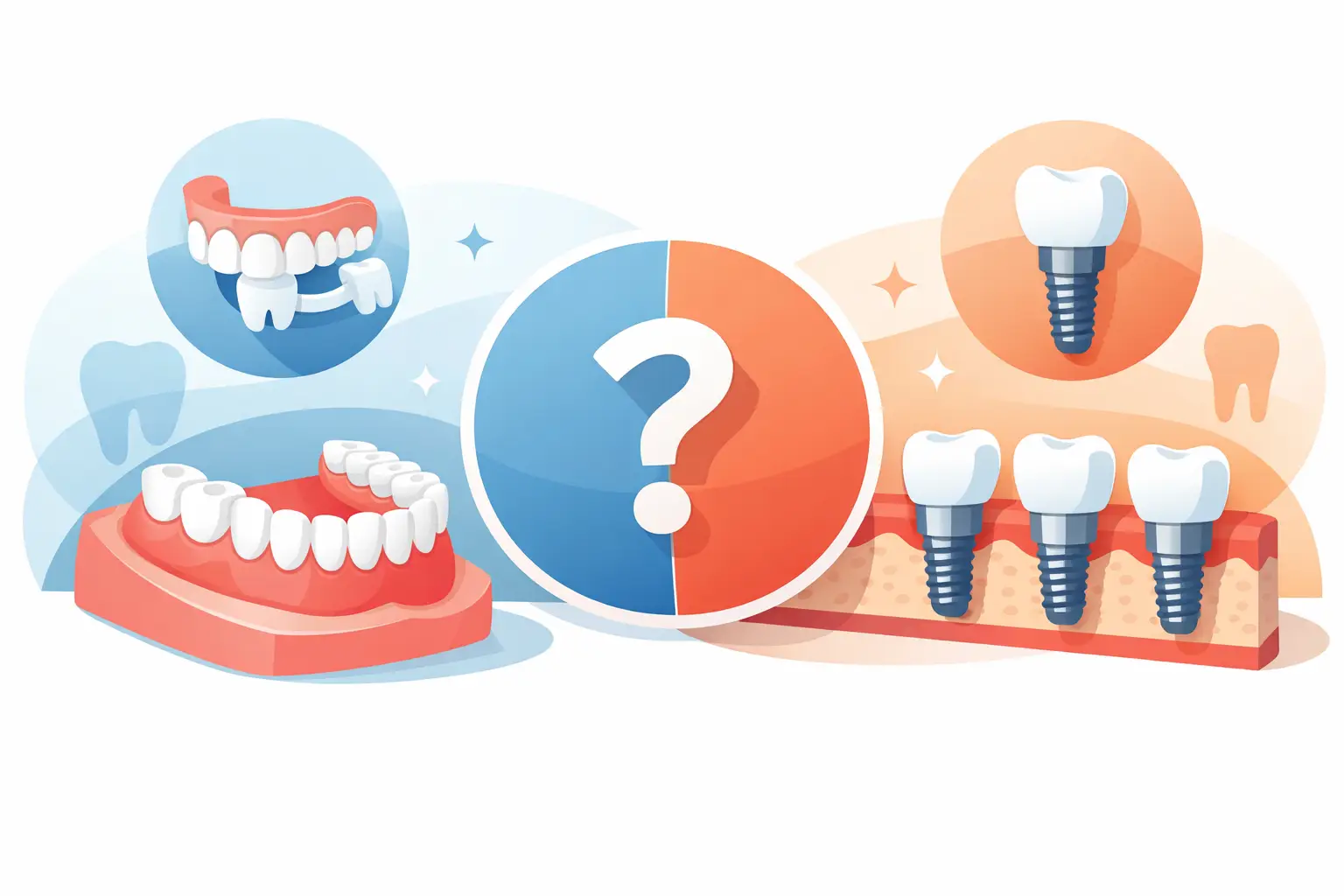
Dentures are removable replacement teeth. They may replace a few missing teeth, called partial dentures, or a full upper or lower arch, called complete dentures. Modern dentures are designed to look natural and restore everyday function, but they sit on the gums and need to be removed for cleaning.
Dental implants are small posts placed in the jawbone to act like artificial tooth roots. Once the implant has healed and integrated with the bone, it can support a crown for one tooth, a bridge for several teeth, or a full-arch restoration. Implants stay in place and are cared for much like natural teeth.
Neither option is automatically “better.” Dentures may be the practical choice for someone who wants a shorter, lower-cost path to replacing several teeth. Implants can be a strong long-term option for someone who wants a fixed replacement and has adequate bone and overall health for the procedure.
When dentures may be the right choice
Dentures remain a reliable option for many people. They can replace multiple missing teeth without surgery, and treatment is generally completed more quickly than implant treatment. This can be especially helpful if teeth have already been removed or need to be removed soon.
A partial denture can fill gaps when some healthy natural teeth remain. A complete denture can restore the appearance of a full smile after all teeth in an arch have been lost. Dentures can also support the shape of the lips and cheeks, which may change after tooth loss.
Cost is often a major consideration. Dentures usually have a lower upfront cost than implants, although the exact amount depends on the type of denture, materials, required extractions, and any preparation needed. If you have dental insurance, coverage can vary by plan. Discussing your benefits and expected out-of-pocket costs before treatment can make planning feel much more manageable.
The trade-off is that dentures require adjustment. New dentures can feel bulky at first, and it may take time to learn how to eat and speak comfortably. They can also shift during the day, particularly lower dentures, because the lower jaw provides less natural suction. Denture adhesives may help some patients, but they do not replace a proper fit.
As the jawbone and gums change over time, a denture may need to be adjusted, relined, repaired, or replaced. Regular dental visits remain important, even if you no longer have natural teeth.
Daily care for dentures
Dentures should be removed and cleaned every day with a soft denture brush and a product intended for dentures. They should not be cleaned with regular toothpaste, which can be too abrasive. It is also important to clean the gums, tongue, and any remaining natural teeth.
Most dentures should be taken out at night unless your dentist gives different instructions. This gives the gum tissue time to rest and helps you keep the appliance clean.
When dental implants may be the right choice
Dental implants are designed to provide a stable foundation for replacement teeth. Because they are anchored in the jawbone, they generally feel more secure than removable dentures. Many patients find that they can speak more confidently and eat a wider variety of foods with an implant-supported tooth or restoration.
Implants may also help preserve jawbone in the area where a tooth is missing. After tooth loss, the bone can gradually shrink because it is no longer receiving stimulation from a tooth root. An implant provides stimulation similar to a natural root, which can help maintain the bone around it.
For a single missing tooth, an implant with a crown can replace the tooth without relying on neighboring teeth for support. For several missing teeth, implants can support a bridge. For patients missing all teeth in an arch, several implants may hold a fixed restoration or a removable implant-supported denture.
Implants involve surgery and a healing period, so they are not an immediate solution for everyone. The process may take several months, particularly if an extraction, bone graft, or gum treatment is needed first. While the treatment requires more planning and usually has a higher upfront cost, an implant can be a durable option with consistent care.
Who is a candidate for implants?
A dental exam is the only way to know whether implants are suitable for you. Your dentist will look at the health of your gums, the amount and quality of jawbone, your bite, and any conditions that could affect healing.
People with gum disease may need treatment before implant placement. Smoking can affect healing and increase the chance of complications. Conditions such as uncontrolled diabetes can also require added planning. These factors do not always rule out implants, but they are part of an honest conversation about expected results.
Some patients need a bone graft before receiving an implant. This adds time and cost, but it can create the support needed for a more stable result. If you have been missing teeth for many years, asking about bone levels early is helpful.
Comparing cost, comfort, and long-term maintenance
The cost difference between dentures and implants is real, but it should be viewed over time rather than only at the first appointment. Dentures usually cost less initially, yet they may need relines, repairs, or replacement as your mouth changes. Implant treatment costs more at the start because it includes surgical placement and the final restoration, but it may offer a longer-lasting fixed solution.
Comfort is also personal. Some people adapt well to dentures and are pleased with the result. Others find a removable appliance frustrating, particularly if it moves while eating or speaking. Implant-supported options can offer more stability, but they require a willingness to undergo surgery and follow a longer treatment plan.
Maintenance differs, too. Dentures must be removed and cleaned. Implants are brushed and flossed like teeth, though implant bridges and full-arch restorations may need special cleaning tools or techniques. In either case, routine checkups help identify changes before they become larger problems.
A third option: implant-supported dentures
The choice is not always limited to traditional dentures or fully fixed implants. Implant-supported dentures combine parts of both approaches. A denture attaches to a small number of implants for added stability, but it can still be removed for cleaning in many cases.
This approach may reduce slipping and improve chewing compared with a conventional denture. It can also be less costly than a full fixed-arch implant restoration. Whether it is appropriate depends on bone levels, the condition of your gums, and your treatment goals.
Questions to ask at your consultation
A good consultation should leave you with a plan you understand. Ask which option best fits your current oral health, what treatment steps are required, how long each option will take, and what follow-up care you should expect. It is also reasonable to ask about the total expected cost, insurance coverage, and available financial arrangements.
Be open about what matters most to you. If you need a faster solution, want to avoid surgery, are concerned about a removable appliance, or have a specific budget, those details help your dentist recommend an option that fits your life rather than a one-size-fits-all answer.
Tooth replacement is a personal decision, and you do not need to make it alone. Schedule a consultation to review your smile, your comfort, and your practical priorities, then choose a treatment plan that helps you move forward with confidence.