
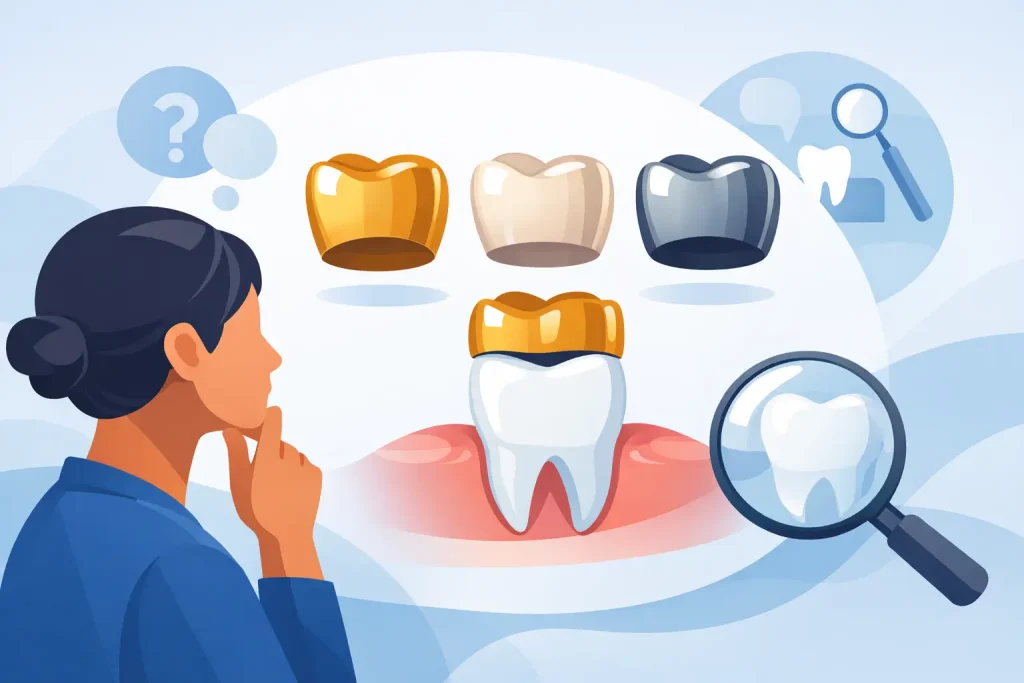
A dental crown is not a one-size-fits-all repair. The best choice for a visible front tooth may not be the best choice for a back molar that handles most of your chewing. If you are wondering how to choose dental crown material, start with the tooth being treated, your bite, and what you need from the result – not simply the material name.
A crown covers and protects a tooth that has been weakened by a large filling, decay, a crack, extensive wear, or root canal treatment. Your dentist can help you compare options in plain language and recommend a crown that supports both your oral health and your daily comfort.
How to Choose a Dental Crown for Your Tooth
The first question is not, “What is the strongest crown?” It is, “What does this tooth need?” A crown must fit precisely at the gumline, work comfortably with the teeth around it, and hold up to the force placed on it. Strength matters, but appearance, tooth location, and bite are also part of the decision.
A front tooth is seen when you smile and may need a highly natural-looking material that blends with nearby teeth. A molar is less visible but absorbs substantial chewing pressure. Someone who clenches or grinds their teeth may need a different recommendation than someone with a lighter bite.
Your dentist will also consider how much healthy tooth structure remains. In some cases, protecting the remaining tooth is the main goal. In others, matching the color and translucency of your natural teeth is just as significant.
The Main Dental Crown Materials
Modern crowns are made from several reliable materials. Each has benefits and possible trade-offs.
All-Ceramic or Porcelain Crowns
Ceramic and porcelain crowns are popular because they can be color-matched to your natural teeth. They are often an excellent choice for front teeth and other visible areas of the smile. High-quality ceramic can reflect light in a way that looks more like natural enamel than some other materials.
The trade-off is that not every ceramic option is ideal for every bite. If you have heavy grinding habits or a particularly forceful bite, your dentist may recommend a stronger ceramic design or a different material for a back tooth.
Zirconia Crowns
Zirconia is a type of ceramic known for its strength. It is frequently recommended for molars, bridges, and patients who place significant pressure on their teeth. Newer zirconia options can also look very natural, making them useful in visible areas when strength is a priority.
Because zirconia is strong, it can be a practical choice for people who clench or grind. The right polish and bite adjustment matter, however, since any crown material should be designed to work gently with the opposing teeth.
Porcelain-Fused-to-Metal Crowns
Porcelain-fused-to-metal crowns combine a metal base with a tooth-colored porcelain outer layer. They have a long history in dentistry and can offer dependable strength, particularly in the back of the mouth.
Their main drawback is cosmetic. Over time, a dark line may become visible near the gumline, especially if the gums recede. They also may not have the same translucent appearance as an all-ceramic crown. For some patients, those concerns are minor; for a highly visible front tooth, they may be more noticeable.
Full Metal Crowns
Gold-colored and other metal crowns are very durable and typically require less removal of the natural tooth than some alternatives. They are often gentle on opposing teeth and can last well when properly cared for.
The obvious consideration is appearance. Many patients prefer metal crowns only for teeth that do not show when they smile. Still, if function and longevity are your top priorities for a back molar, it can be worth discussing.
Consider Where the Crown Will Sit
Location changes the conversation. A crown on a front tooth needs to match the neighboring teeth in shade, shape, and brightness. A crown on a molar needs to withstand repeated chewing. Premolars sit between these needs, so the right option depends on how visible the tooth is and how much force it receives.
Your dentist may also look at the opposing tooth. For example, a crown that bites against a natural tooth needs a smooth, carefully adjusted surface. If you already have crowns, fillings, or implants nearby, those restorations can affect material and shade choices.
Do not choose based on photos alone. A crown that looks great in a sample image may not be the best match for your mouth, bite, or gumline.
Think About Your Bite and Daily Habits
Grinding, clenching, chewing ice, biting pens, and opening packages with your teeth can shorten the life of any restoration. Tell your dentist if you wake with jaw soreness, notice flattened teeth, or have been told that you grind at night.
A stronger material may be recommended, but material alone does not solve every problem. You may also benefit from a custom night guard to protect your natural teeth and crown. If a crown feels high when you bite down, contact your dental office promptly. Small bite adjustments can prevent discomfort and unnecessary stress on the crown.
Ask About Appearance Before the Crown Is Made
For a crown near the front of your smile, ask how the shade will be selected. Teeth are rarely one flat color. They may be lighter at the edge, darker near the gumline, or affected by fillings and natural variation. A thoughtful shade match helps the crown blend in rather than stand out.
It also helps to discuss your expectations honestly. If you are planning whitening, do that before the final shade is chosen when possible. A crown does not whiten in the same way natural enamel does, so whitening afterward can leave a noticeable difference between your teeth and the crown.
Understand the Cost and Insurance Conversation
Crown costs vary based on the material, the tooth being treated, whether additional work is needed, and the details of your insurance plan. A tooth that needs a root canal, buildup, or gum treatment before receiving a crown will involve a different treatment plan than a straightforward replacement crown.
Ask for a clear estimate before treatment begins. You should understand what is included, what your insurance may cover, and what your expected out-of-pocket amount could be. Insurance plans often have frequency limits, waiting periods, annual maximums, or specific rules for crown coverage, so approval is not always the same as full payment.
At Parliament Street Dentistry, the team can discuss treatment costs clearly and coordinate direct insurance billing with most dental insurance plans. That gives you a clearer picture of the financial side before you move forward.
Questions Worth Asking at Your Appointment
You do not need to arrive knowing every dental term. A few practical questions can make the decision easier:
- Which crown material do you recommend for this specific tooth, and why?
- How will this option handle my bite and any grinding habits?
- Will the crown be matched to my surrounding teeth?
- Is a temporary crown needed while the final crown is made?
- What costs should I expect after insurance is processed?
A good recommendation should make sense to you. If two materials could work well, your dentist can explain the differences in appearance, strength, preparation, and cost so you can choose with confidence.
Care Helps a Crown Last
A crown still needs everyday care. Brush twice daily with fluoride toothpaste, clean between your teeth every day, and keep regular dental checkups. Decay can still develop at the edge where the crown meets the natural tooth, and gum health remains essential.
Avoid using your teeth as tools. If you grind at night, wear the night guard your dentist recommends. Call your dental office if you notice pain when biting, a loose crown, a crack, sensitivity that does not improve, or swelling around the tooth.
The right crown should feel like part of your smile, not something you have to work around. Book a consultation to discuss your tooth, your goals, and the option that makes the most sense for your comfort and long-term dental health.
New to Parliament Street Dentistry? See our new patient information, including CDCP and insurance, or contact our Cabbagetown office with any questions.