
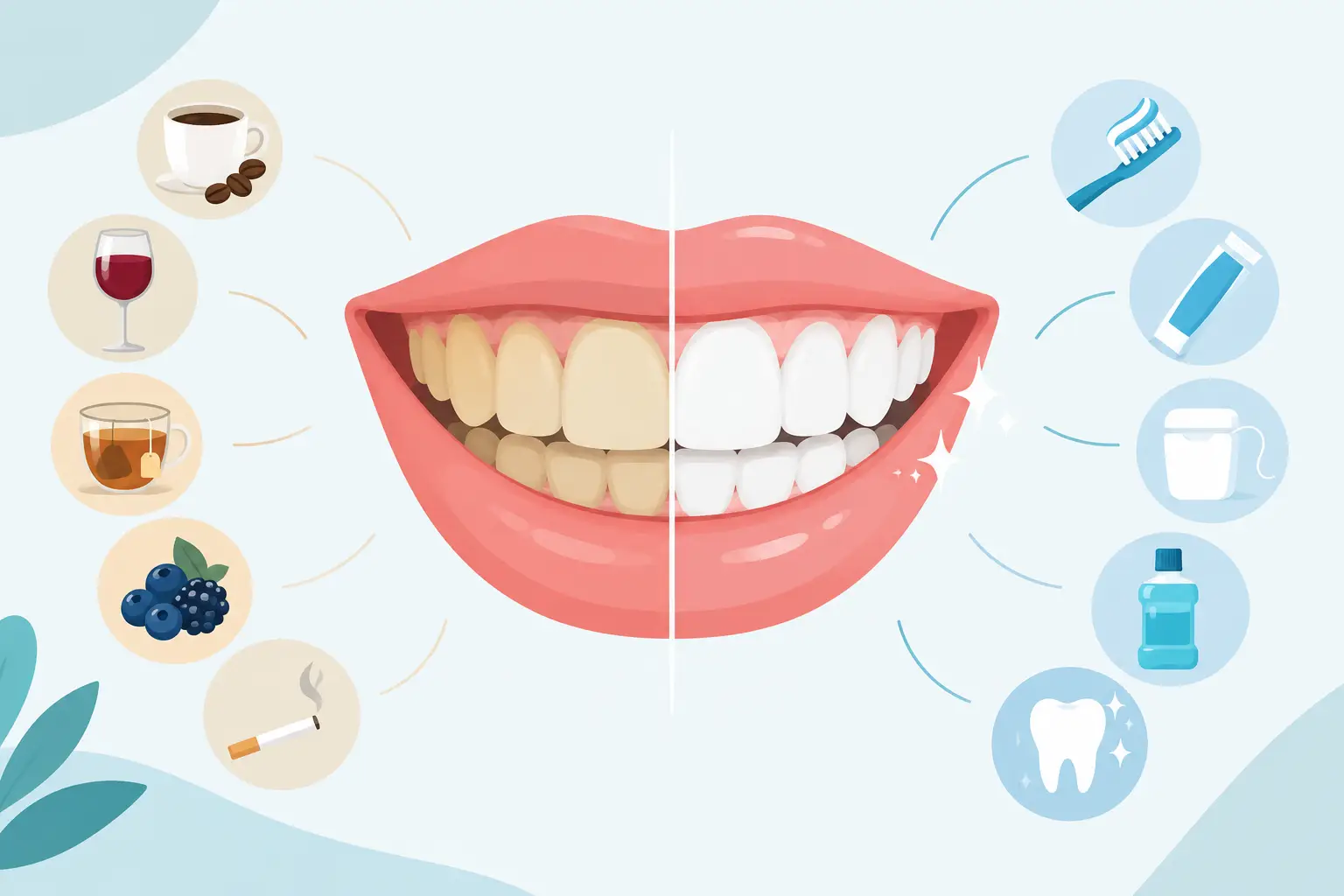
A morning coffee, a glass of red wine, or a favorite tomato-based dinner can leave you wondering why your teeth stain easily while someone else’s seem to stay bright. Tooth staining is common, and it is not always a sign that you are doing anything wrong. Your diet, daily habits, enamel, and dental health can all affect how quickly discoloration appears.
The good news is that many stains can be reduced or prevented with a few practical changes and regular dental care. If the color of your teeth has changed suddenly or brushing no longer seems to help, a dental checkup is a good place to start.
Why teeth stain easily for some people
Teeth are protected by enamel, the hard outer layer of each tooth. Although enamel is strong, it is not completely smooth. It has tiny natural grooves and pores that can hold onto pigments from food, drinks, and tobacco. Over time, those pigments build up and make teeth look yellow, brown, or dull.
Some people naturally have enamel that is thinner or more porous than others. As enamel wears down, the dentin beneath it becomes more visible. Dentin is naturally more yellow in color, so teeth may appear darker even when there is not much surface staining.
Age can also play a role. Enamel gradually becomes thinner through normal chewing, brushing, and exposure to acidic foods and drinks. This does not mean you should expect severe discoloration, but it can explain why your teeth look different now than they did years ago.
Foods and drinks with strong pigments
Coffee and tea are frequent causes of surface stains. Tea, including some herbal varieties, contains compounds called tannins that can help pigments cling to enamel. Red wine, cola, dark berries, tomato sauce, curry, and soy sauce can have a similar effect.
You do not need to avoid every food or drink with color. Frequency matters more than one occasional meal. Sipping coffee throughout an entire workday gives pigments repeated contact with your teeth, which can cause more staining than enjoying a cup with breakfast and then drinking water afterward.
Tobacco and nicotine use
Smoking and other tobacco use are major contributors to yellow or brown tooth stains. Nicotine itself may be clear at first, but it turns yellow when exposed to oxygen. Combined with tar and other substances in tobacco, it can create stains that are difficult to remove with regular brushing alone.
Vaping may not produce the same tar buildup as cigarettes, but nicotine and flavoring ingredients can still contribute to dry mouth and staining concerns. A dental team can help you understand what is happening in your specific situation without judgment.
Dry mouth and plaque buildup
Saliva does more than keep your mouth comfortable. It helps rinse away food particles, neutralize acids, and protect teeth from plaque. When your mouth is dry, pigments and plaque may stay on tooth surfaces longer.
Dry mouth can be related to medications, dehydration, mouth breathing, certain health conditions, or cannabis and tobacco use. If you regularly wake up with a dry mouth or feel thirsty even when you drink water, mention it at your next appointment.
Plaque and tartar also make teeth appear darker. Plaque is a soft, sticky film that can collect pigments. When it hardens into tartar, it cannot be removed with a toothbrush at home. A professional cleaning can safely remove this buildup and reveal the natural tooth color underneath.
Not every dark spot is a simple stain
A brown or gray area on one tooth should not automatically be treated as a cosmetic issue. Cavities, old fillings, cracks, trauma, and nerve changes inside a tooth can all cause discoloration. A tooth that turns gray after an injury, even an injury from years ago, needs a dental evaluation.
Certain medications and childhood exposure to high fluoride levels can also affect tooth color from within the tooth. These intrinsic stains do not respond as well to ordinary whitening products because they are not sitting on the enamel surface.
This is why an exam matters before whitening. The right option depends on whether the issue is surface staining, the natural shade of your teeth, enamel wear, or a dental condition that needs treatment first.
Everyday habits that help reduce stains
The goal is not a perfect, unnatural shade of white. Healthy teeth come in a wide range of natural colors. Instead, focus on limiting stain buildup while protecting your enamel.
After coffee, tea, wine, or a deeply colored meal, rinse your mouth with water. This simple habit reduces the time pigments stay on your teeth. Drinking water with meals also supports saliva production and helps wash away food particles.
Brush twice a day with a soft-bristled toothbrush and fluoride toothpaste. Brush gently for two minutes. Scrubbing hard may seem like a way to polish stains away, but aggressive brushing can wear down enamel and irritate gums, making the appearance of discoloration worse over time.
Floss or clean between your teeth daily. Stains and plaque often collect where a toothbrush cannot reach well, especially around crowded teeth and along the gumline. Cleaning these areas can make a noticeable difference in how fresh your smile looks.
If you have acidic drinks such as soda, citrus beverages, or sports drinks, avoid brushing immediately afterward. Acid temporarily softens enamel. Rinse with water first, then wait about 30 minutes before brushing. This gives your mouth time to rebalance and helps reduce enamel wear.
Are whitening toothpastes and strips safe?
Whitening toothpaste can be useful for mild surface stains. Many formulas work by using gentle polishing ingredients, not by changing the internal color of the tooth. Results are usually gradual and modest, which is often appropriate for everyday stain control.
Whitening strips and other over-the-counter products may lighten teeth more noticeably, but they are not right for everyone. They can cause temporary sensitivity or gum irritation, particularly if the trays or strips do not fit well. They also will not whiten crowns, veneers, fillings, or bonding, which can lead to uneven color.
It depends on the cause of the discoloration and the condition of your teeth. If you have sensitive teeth, cavities, gum recession, or dental work on visible teeth, ask your dentist before starting a whitening product. A professional recommendation can help you avoid spending money on a solution that will not match your needs.
When a dental cleaning can make the biggest difference
Many people are surprised by how much brighter their teeth look after a routine cleaning. Removing plaque, tartar, and surface stains may be all that is needed to refresh your smile. It also gives your dentist a chance to check for cavities, gum concerns, worn enamel, and other issues that can affect tooth color.
For Toronto families, staying on schedule with routine visits makes small concerns easier to manage. At Parliament Street Dentistry, patients can discuss cleaning, whitening questions, treatment options, and costs before moving forward. The clinic accepts most dental insurance plans and offers direct insurance billing, helping make routine care easier to arrange.
A simple next step for a brighter smile
If your teeth stain easily, start with water after staining drinks, gentle daily brushing and flossing, and regular professional cleanings. Avoid harsh DIY methods such as lemon juice, charcoal powders, or abrasive scrubs. These can damage enamel and make discoloration more noticeable over time.
A healthy smile does not have to look artificially white. If you are seeing new stains, uneven color, or changes that concern you, book a dental checkup and get clear answers before choosing a whitening treatment.