
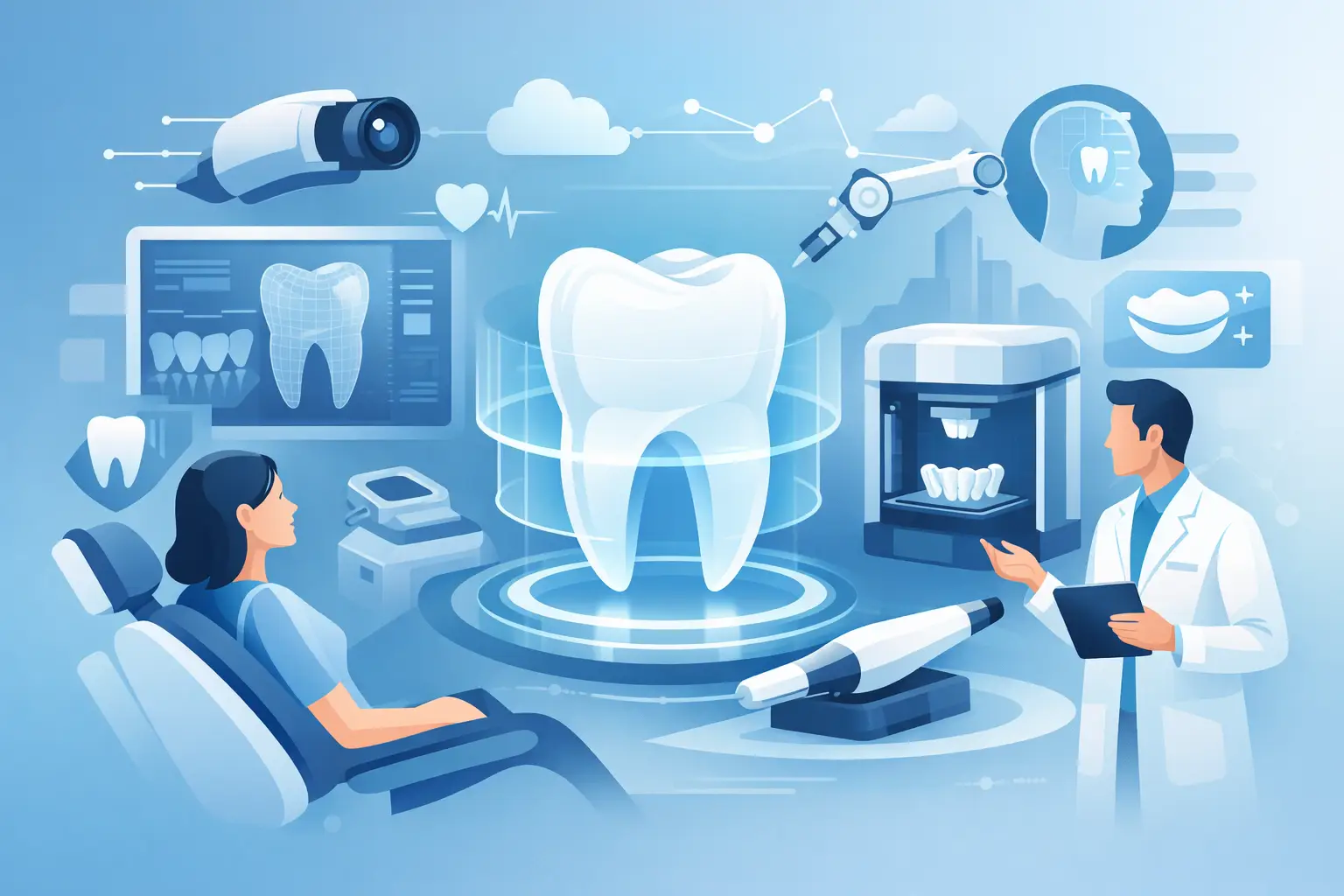
A crown appointment once often began with a tray of impression material and several minutes of waiting for it to set. Now, many patients may see a small handheld scanner instead. Digital dentistry trends are changing how dentists capture images, plan treatment, and explain options – but the best technology should always make care clearer and more comfortable, not more complicated.
For families, the real value is practical. Modern tools can help reduce repeat appointments, support more detailed treatment planning, and give patients a better view of what is happening in their mouths. They do not replace regular checkups, good home care, or conversations with a dentist who knows your needs.
Digital Dentistry Trends That Affect Your Visit
Not every new device belongs in every appointment. A routine cleaning may look much the same as it did years ago, while treatment for a cracked tooth, missing tooth, bite issue, or complex dental concern may benefit from digital imaging and planning.
The right approach depends on your oral health, the treatment being considered, and whether the added information will change the care you receive. Technology is most useful when it answers a real clinical question.
Digital Scans Can Replace Traditional Impressions
Intraoral scanners create a detailed digital model of your teeth and gums. Instead of biting into a bulky tray filled with impression material, the dentist or dental team moves a small scanner around the mouth to capture images.
For many patients, particularly those with a strong gag reflex, this can be a more comfortable experience. Digital scans are commonly used when planning crowns, bridges, aligners, retainers, night guards, and some implant restorations. The images can also make it easier to show you why a restoration is needed and how it is designed to fit with nearby teeth.
A scan is not automatically the best solution for every case. Some situations still require traditional impressions or additional records. What matters is obtaining an accurate result that helps the final restoration fit properly and feel natural.
Digital X-Rays Offer Clearer Images With Less Waiting
Digital X-rays appear on a screen shortly after they are taken. This allows your dentist to review areas between teeth, under existing fillings, and around tooth roots with you during the appointment.
The immediate image can make conversations about cavities, bone levels, and treatment recommendations easier to follow. Digital systems also generally use less radiation than older film X-ray systems. Still, X-rays should be taken only when they are clinically needed, based on your history, symptoms, and risk of dental disease.
For more detailed planning, a dentist may recommend a cone beam CT scan, also called CBCT. This three-dimensional image can be helpful for implant planning, impacted teeth, certain root canal concerns, and jaw-related issues. It provides more information than a standard dental X-ray, but it also involves more radiation than a regular two-dimensional image, so it should be used thoughtfully.
How Digital Tools Improve Treatment Planning
One of the most helpful changes in modern dentistry happens before treatment begins. Digital photos, scans, and X-rays can be reviewed together to create a fuller picture of your oral health.
If you are considering a crown, implant, bridge, or clear aligner treatment, visual planning can help you understand the recommended sequence of care. You can see the condition being discussed rather than relying only on unfamiliar dental terms. That makes it easier to ask useful questions about timing, alternatives, expected results, and cost.
Same-Day Design Is Helpful, but Not Always Necessary
Computer-aided design and manufacturing can be used to create restorations such as crowns. In some cases, a restoration can be designed and made in one visit. For a busy working adult or parent managing a family schedule, fewer appointments can be a meaningful advantage.
However, same-day treatment is not always the right choice. Complex cosmetic work, restorations involving multiple teeth, and cases that require close coordination with a dental lab may need more time. A carefully planned treatment that takes two visits can be the better option when it supports fit, appearance, and long-term function.
3D Printing Is Expanding What Dental Offices Can Make
Three-dimensional printing is increasingly used to create models, surgical guides, retainers, night guards, temporary restorations, and certain dentures. A surgical guide, for example, can help a dentist place an implant with greater precision after detailed planning.
Patients may not always see the printer itself, but they may notice a faster process for certain appliances. As with any dental material, the key questions are whether it is appropriate for the intended use, how durable it is, and how it will be monitored over time.
Artificial Intelligence Is a Support Tool, Not a Substitute for a Dentist
Artificial intelligence is beginning to assist with reviewing dental images and identifying areas that may need a closer look. It can help flag possible cavities, bone changes, or patterns that a dentist will evaluate alongside the full exam.
This can be useful as a second set of eyes, especially when comparing images over time. But software cannot feel a tooth, assess your symptoms, understand your health history, or make a complete diagnosis on its own. A treatment recommendation should come from a dentist’s clinical judgment and a clear discussion with you.
If a digital image or software finding is part of your appointment, it is reasonable to ask what the image shows, how certain the finding is, and what could happen if you monitor the area instead of treating it now. Good dental care leaves room for informed decisions.
What These Trends Mean for Costs and Insurance
Advanced technology can improve planning and convenience, but it can also affect the cost of a service. Insurance coverage is determined by your individual plan, not simply by whether a treatment uses a digital scanner, 3D image, or computer-designed restoration.
Before agreeing to treatment, ask for a clear estimate that explains the recommended procedure, available alternatives, and any expected out-of-pocket amount. If you have dental insurance, direct billing can reduce paperwork and help you understand your portion before treatment begins. It is also helpful to ask whether a proposed treatment is urgent, whether it can be phased, and what follow-up care may be needed.
At Parliament Street Dentistry, clear cost discussions and direct insurance billing are part of making dental care easier to manage. Technology should support that same goal by helping patients understand their options rather than adding uncertainty.
Choosing Care That Feels Right for Your Family
The most meaningful digital dentistry trends are not about having the newest screen in the treatment room. They are about making care more precise when precision matters, more comfortable when comfort is a concern, and easier to understand when a decision needs to be made.
At your next checkup, ask which tools may be useful for your specific needs and why. A dental team that explains the purpose, benefits, limits, and costs of each option can help you move forward with confidence. When you are ready to schedule care for yourself or your family, booking a visit is a simple first step toward a healthier smile.