
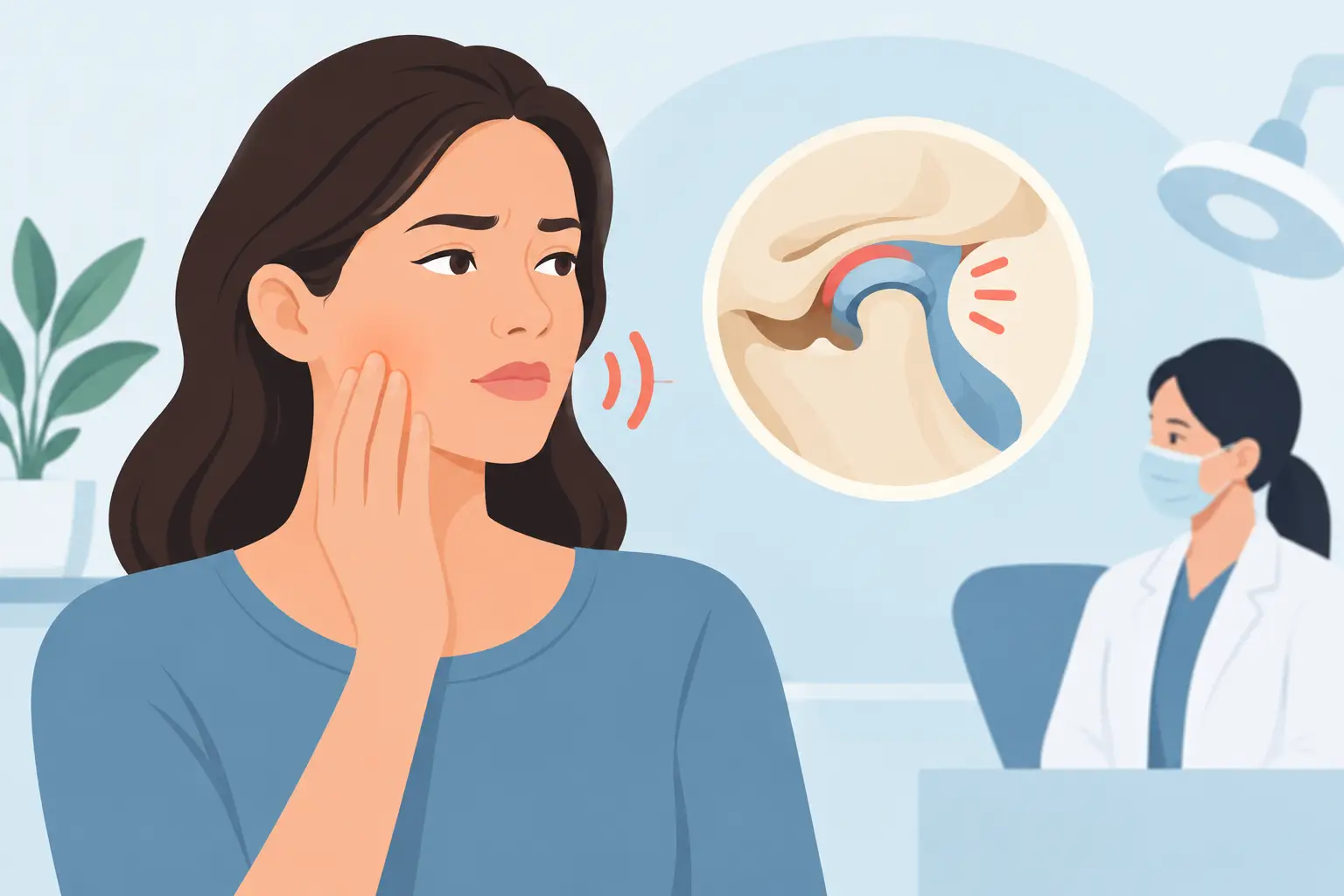
A click near your ear when you chew, yawn, or open wide can be surprising. For many people, it is painless and occasional. But if you are wondering what causes jaw clicking, the answer often involves the joint and muscles that help your lower jaw move. When clicking comes with pain, limited movement, headaches, or a change in your bite, it is worth scheduling a dental exam.
What Causes Jaw Clicking?
Your jaw connects to your skull through the temporomandibular joints, often called the TMJ. You have one on each side of your face, just in front of your ears. These joints work with muscles, ligaments, and a small cushioning disc to let you talk, chew, and yawn.
A clicking or popping sound can happen when that disc shifts slightly as the jaw opens and then moves back into position. It can also occur when the joint is under extra strain or when the chewing muscles are tense. A click alone does not always mean there is a serious problem, but the details matter: how often it happens, whether it hurts, and whether your jaw still moves normally.
Jaw clenching and teeth grinding
Clenching your jaw during the day or grinding your teeth at night can overload the jaw muscles and joints. Stress is a common contributor, but grinding can also happen during sleep without you realizing it. You may wake with a tired jaw, sore temples, tooth sensitivity, or headaches.
Over time, this repeated pressure can make clicking more noticeable. A dentist can look for signs of wear on your teeth and discuss whether a custom night guard or other approach may be appropriate for you.
TMJ irritation or disc movement
The cushioning disc inside the joint normally moves smoothly with your jaw. If it is not moving in the usual way, you may hear a click as you open and close. This is sometimes called disc displacement with reduction, meaning the disc briefly moves out of position and then returns during movement.
Some people have this type of clicking for years without pain or limitation. Others develop tenderness, stiffness, or a feeling that the jaw catches. The treatment decision depends on your symptoms rather than the sound alone.
Muscle tension and everyday habits
Small habits can keep jaw muscles working harder than they need to. Chewing gum frequently, biting nails, resting your chin in your hand, chewing ice, and eating very tough foods may aggravate an already sensitive joint. Even holding tension in your face while concentrating at work can contribute.
If clicking started after a busy or stressful period, muscle tension may be part of the picture. Paying attention to your resting jaw position can help: your lips can be together, but your teeth should not be clenched together.
Bite changes, dental issues, or joint wear
Changes in how your teeth meet may affect how your jaw functions. This could happen after dental work, tooth loss, uneven tooth wear, or a broken tooth that changes the way you bite down. Arthritis and normal joint wear can also affect the TMJ, particularly as people get older.
A dental exam can help identify concerns with your teeth and bite. Not every bite difference is the cause of clicking, and not every case requires treatment. The goal is to find the factors that may be placing extra stress on your jaw.
Injury or opening too wide
A blow to the jaw, a fall, or a motor vehicle accident can irritate the joint and surrounding muscles. Clicking can also appear after opening very wide for a long time, such as during a lengthy dental procedure, singing, or an extended yawn. In many cases, the area settles with time and gentle care, but persistent symptoms should be assessed.
When Jaw Clicking Needs Attention
Painless clicking that happens once in a while is often not an emergency. Still, a new or ongoing sound is worth mentioning at your regular checkup, especially if it is becoming more frequent.
Book a dental appointment sooner if your jaw clicking occurs with pain while chewing, swelling, regular headaches, ear-area discomfort, or tenderness in the jaw muscles. You should also be checked if your jaw locks open or closed, you cannot open your mouth comfortably, or your teeth suddenly feel as though they do not fit together the same way.
Seek urgent medical care after a significant injury to the face or jaw, particularly if there is severe pain, bleeding, visible swelling, trouble breathing, or an inability to close your mouth. Those symptoms may need care beyond a routine dental visit.
What You Can Do While You Wait for an Appointment
If your jaw feels sore, give it a short break. Choose softer foods for a few days and take smaller bites. Try to avoid wide yawns, gum, chewy candy, crusty bread, and hard foods that require heavy chewing. A warm compress on the side of the face may relax tight muscles, while a cold pack may feel better if the area is newly sore or swollen.
Over-the-counter pain medication may help some people, but it is best to follow the product directions and check with a pharmacist or physician if you have health conditions, take other medication, are pregnant, or are unsure what is safe for you.
It may also help to notice when the clicking occurs. Does it happen only at breakfast? After gum? During stressful meetings? Does your jaw deviate to one side when you open? These observations give your dental team useful information and can make your appointment more productive.
Avoid trying to force the joint to pop back into place or doing aggressive jaw stretches you found online. The TMJ is complex, and a technique that helps one person can irritate another person’s joint.
How a Dentist Can Help
A dentist will usually begin by asking about the sound, pain level, headaches, injuries, and any clenching or grinding. They may examine how wide you can open, feel the muscles around the jaw, listen for joint sounds, and check your teeth for wear or bite changes. X-rays or other imaging are not needed for every patient, but they may be recommended when the exam suggests a joint or dental concern that needs a closer look.
Care often starts conservatively. Depending on the cause, this may include guidance on reducing jaw strain, treating tooth problems, protecting teeth from nighttime grinding, or referring you to another health professional when appropriate. Surgery is not the starting point for most jaw-clicking concerns.
Clear communication matters. You should understand what your exam found, what treatment is being recommended, what alternatives exist, and what costs to expect before moving forward. If your jaw has been clicking or becoming uncomfortable, Parliament Street Dentistry can help you arrange an assessment and discuss practical next steps, including direct insurance billing for eligible plans.
A quiet jaw is not the only measure of success. The priority is comfortable movement, a stable bite, and being able to eat, speak, and smile without worrying about your jaw every time it opens.